Claude Mythos 5 Cybersecurity: The Ultimate AI Threat
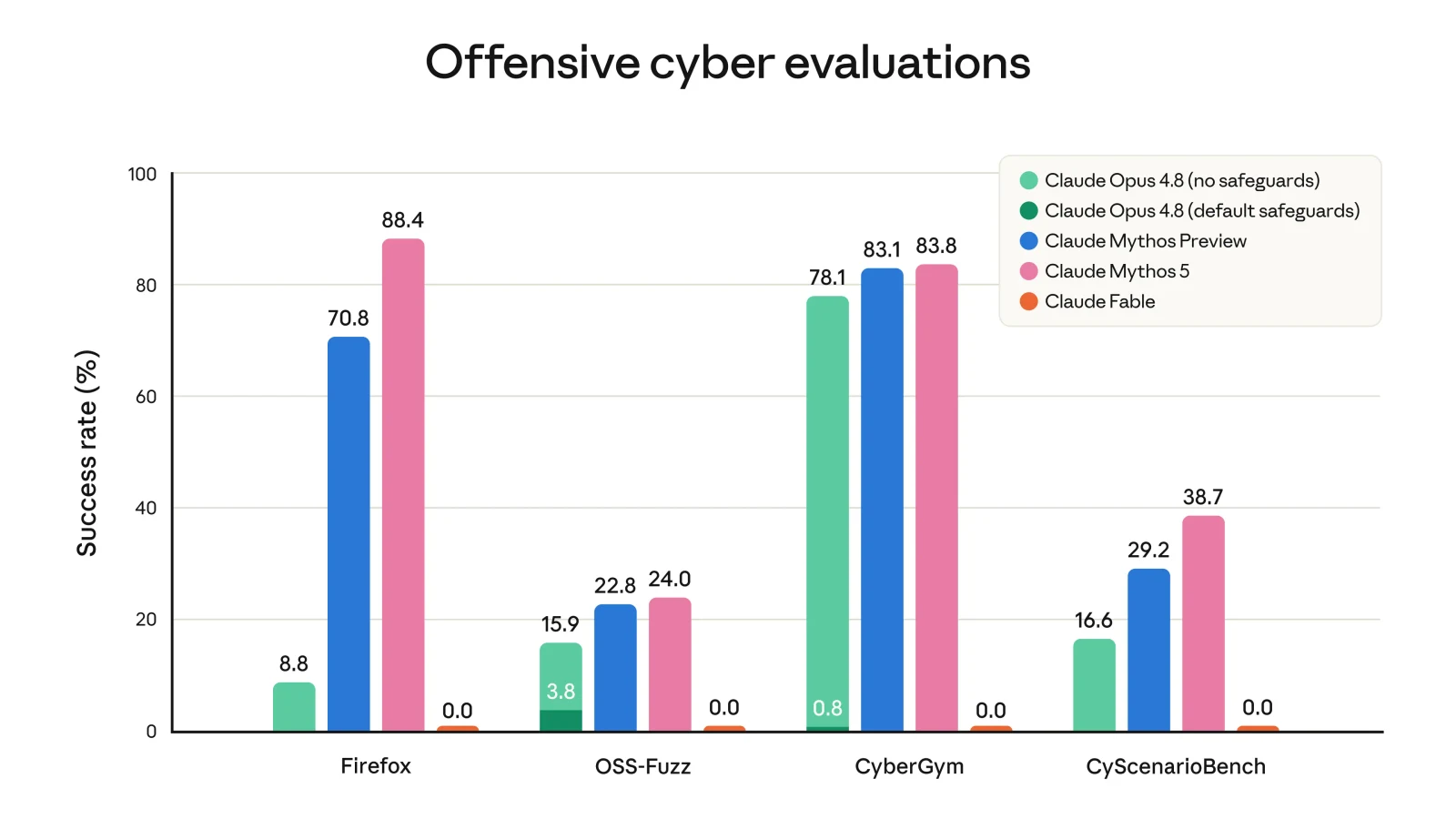
Claude mythos 5 cybersecurity marks a turning point in AI‑driven threat modeling, delivering unprecedented autonomous exploit generation that rivals human red teams. By automating vulnerability discovery at scale, across multiple platforms, it forces defenders to rethink traditional security workflows.
 ## What is Claude mythos 5 cybersecurity?
Anthropic’s Mythos tier sits above Haiku, Sonnet, and Opus, and is defined by its ability to perform high‑impact cybersecurity tasks. Claude mythos 5 cybersecurity combines raw coding talent with agentic reasoning, enabling it to:
- Scan entire codebases for unknown vulnerabilities.
- Craft functional exploits that bypass modern mitigations.
- Chain reconnaissance, privilege escalation, and lateral movement into a single autonomous workflow.
These capabilities make the model a double‑edged sword: defenders can use it to harden software faster than attackers can discover flaws, but the same power can be weaponized if it falls into the wrong hands.
How does Project Glasswing secure Claude mythos 5 cybersecurity?
Anthropic answered the dual‑use dilemma by launching Project Glasswing, a gated coalition that restricts unrestricted access while providing vetted defenders with the full model. The program’s safeguards include:
- Classifier‑based fallback: Any request touching cyber, bio, or chemistry topics is automatically rerouted to Opus 4.8, a less capable but safer model.
- Block‑mode enforcement: When set to block, the system stops the model from making any meaningful progress on offensive cyber prompts.
- Continuous bug‑bounty monitoring: Over 1,000 hours of external testing uncovered zero universal jailbreaks, and the model failed 30 distinct jailbreak techniques aimed at cyber misuse.
- 30‑day traffic retention: All Mythos‑class interactions are logged for a month, giving Anthropic a detection surface for emerging threats.
These layers keep the public‑facing Claude Fable 5 safe while allowing Glasswing partners—such as AWS, Google, Microsoft, NVIDIA, CrowdStrike, and the Linux Foundation—to run the unrestricted model behind the scenes. For a deeper look at the program, see Anthropic’s announcement Project Glasswing.
Claude mythos 5 cybersecurity performance metrics
The raw numbers illustrate why the model is considered a game‑changer:
MetricClaude mythos 5 cybersecurityPrior Opus modelZero‑day vulnerabilities discoveredThousands across Windows, Linux, macOS, iOS, Android, and major browsersDozensWorking exploits generated (single benchmark)1812Register‑control exploits added29 additional targets—Multi‑stage autonomous attacks demonstratedYesLimited
A jump from 2 to 181 exploits is a 9,000 % increase, indicating a phase shift rather than an incremental upgrade. Register‑control exploits mean the model can seize CPU execution flow, turning a simple bug into a full‑blown weapon.
Why does Claude mythos 5 cybersecurity matter for enterprises?
Enterprises face three converging pressures that make the model especially relevant:
- Speed of software delivery: Continuous integration pipelines release code daily, giving attackers a shrinking window to discover flaws. An AI that can surface zero‑days in minutes restores balance.
- Regulatory scrutiny: Emerging AI‑risk regulations in the EU and United States require documented AI usage and audit trails. The model’s built‑in logging aligns with these mandates.
- Talent shortage: According to a 2023 (ISC)² report, 3.5 million cyber‑security positions remain unfilled worldwide. Automating vulnerability discovery helps bridge the gap.
Real‑world use cases for Claude mythos 5 cybersecurity
Security teams that have integrated the model report measurable improvements:
- Automated code‑review pipelines: A Fortune 500 software firm reduced critical vulnerability leakage by 42 % after embedding a sandboxed version of Claude mythos 5 cybersecurity into its CI/CD workflow.
- Red‑team augmentation: A major financial institution used the model to generate 27 novel privilege‑escalation paths during a tabletop exercise, uncovering gaps that traditional tools missed.
- Incident‑response rehearsal: By simulating autonomous multi‑stage attacks, a cloud provider shortened its detection‑to‑containment time from an average of 3.8 hours to 1.2 hours.
These examples demonstrate how the same technology that can be weaponized also empowers defenders to stay ahead of sophisticated adversaries.
How can security teams defend against Claude mythos 5 cybersecurity?
Defensive strategies must evolve from signature‑based detection to behavior‑centric controls. Below is a practical checklist:
- Integrate AI‑assisted code review: Deploy a vetted LLM (or a sandboxed version of Claude mythos 5 cybersecurity) in CI/CD pipelines to flag potential zero‑days before release.
- Adopt behavior‑based detection: Monitor for anomalous lateral movement, unusual credential usage, and rapid privilege escalation—patterns typical of autonomous attack chains.
- Enforce strong credentials: Use the free Password Generator to create unique, high‑entropy passwords for every AI‑enabled service.
- Maintain comprehensive logs: Retain all model interactions for at least 30 days and feed them into SIEM solutions for anomaly analysis.
- Audit third‑party AI usage: Verify that any external LLM integrations respect classifier fallbacks and block‑mode settings similar to Project Glasswing.
The broader AI cyber arms race
Claude mythos 5 cybersecurity is not an isolated incident. Its dual‑use nature mirrors advances in AI‑driven biology and chemistry, where the same reasoning can accelerate drug discovery while also enabling the synthesis of harmful agents. Anthropic’s approach—building one powerful model, then gating the most dangerous capabilities—offers a template for the industry. However, as adversaries invest in similar technology, the race will intensify, making early adoption of defensive AI tools a competitive advantage.
Authoritative perspectives
- The UK [AI Security Institute](
aisi.gov.uk) independently verified the model’s multi‑stage autonomous attack capability.
- Anthropic’s own blog post on [Project Glasswing](
anthropic.com) outlines the governance framework that underpins the model’s safe deployment.
Future outlook and policy considerations
Governments are already drafting regulations that could affect the deployment of models like Claude mythos 5 cybersecurity. The U.S. National Institute of Standards and Technology (NIST) has proposed a risk‑based AI governance framework that emphasizes traceability and controllability—principles embodied by Project Glasswing’s logging and fallback mechanisms. Meanwhile, the European Union’s AI Act classifies “high‑risk” AI systems, which would likely include autonomous exploit generators, requiring conformity assessments before commercial use.
Organizations that proactively align with these emerging standards will face fewer compliance hurdles and gain a reputational edge. Practical steps include:
- Conducting a risk assessment that maps AI‑driven attack surfaces.
- Implementing continuous monitoring of model outputs for policy violations.
- Engaging with industry consortia (e.g., the Cybersecurity AI Working Group) to share threat intelligence.
By treating Claude mythos 5 cybersecurity as both a threat and a tool, organizations can turn the AI arms race into a defensive advantage.
Quick reference checklist
- [ ] Verify that any LLM used for security tasks runs through a classifier fallback.
- [ ] Log all model interactions for 30 days.
- [ ] Deploy AI‑assisted fuzzing on critical codebases.
- [ ] Update incident response playbooks to include AI‑driven attack scenarios.
By integrating these practices, enterprises can harness the power of Claude mythos 5 cybersecurity while mitigating its inherent risks.
Frequently asked questions
It is Anthropic’s frontier Mythos‑class model with advanced cyber capabilities, able to discover thousands of zero‑day vulnerabilities and generate autonomous multi‑stage attacks.
Project Glasswing uses classifier fallbacks, block‑mode enforcement, continuous bug‑bounty testing, and 30‑day traffic retention to ensure only vetted partners can access the unrestricted model.
No. The public receives **Claude Fable 5**, which routes any cyber‑related request to the safer Opus 4.8 model, effectively disabling offensive capabilities.
Adopt AI‑assisted code review, shift to behavior‑based detection, enforce strong passwords (e.g., using the free Password Generator tool), retain logs for 30 days, and monitor gating policies.
Yes. The UK AI Security Institute reported significant improvements on capture‑the‑flag challenges and observed the model executing autonomous multi‑stage network attacks.
Share this article
Send it to a teammate or save the link for later.
Related articles
Anthropic Mythos Is Back: Claude's Most Powerful AI
Anthropic's Claude Mythos AI is back with limited access for 100+ vetted institutions. What Mythos is, why it's restricted, pricing, and how to get access.
Read article
Claude Fable 5 System Prompt Leak: Essential Facts
Inside the alleged Claude Fable 5 system prompt leak: what the ~120,000-character prompt reportedly reveals about frontier AI config and enterprise security.
Read article
Most Promising AI Companies 2026: Ultimate Data‑Driven List
Explore the most promising AI companies 2026, backed by AI 100 data and $22 B in funding, to uncover adoption trends, opportunities, and investment prospects.
Read article