Siri Gemini Free Guide: Privacy, Cost & How It Works
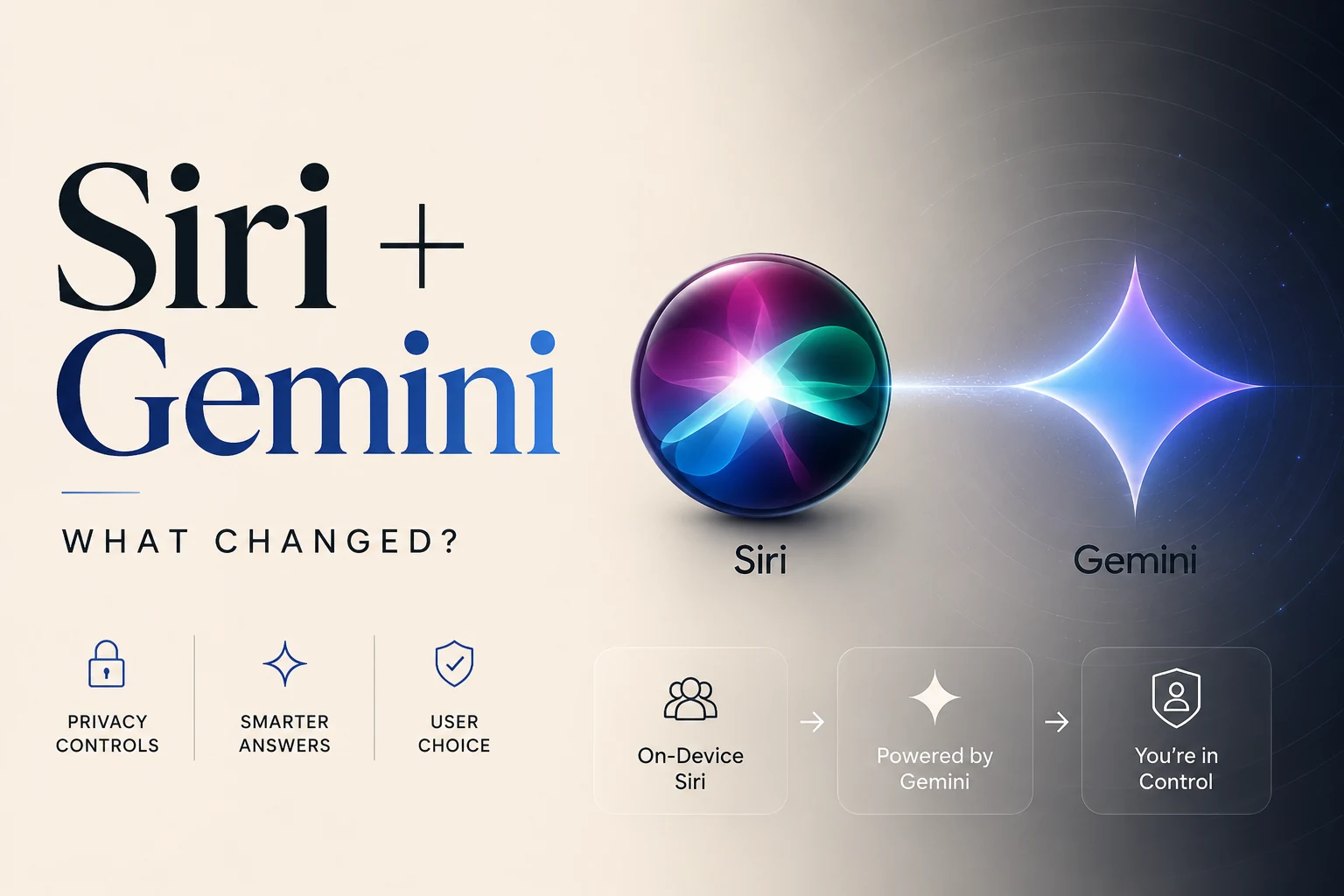
Answer capsule: Siri Gemini is Apple’s newest AI‑powered Siri that blends on‑device intelligence with a custom large‑language model hosted on Google Cloud, while promising that all voice data stays encrypted inside Apple’s Private Cloud Compute enclave.
What is Siri Gemini and why does it matter?
Apple introduced Siri Gemini as the next evolution of its voice assistant, merging on‑device neural‑engine processing with a large‑scale language model that was co‑developed with Google’s Gemini research team. The hybrid design lets Siri answer simple commands instantly on the iPhone, yet still handle complex, multi‑step requests such as drafting emails, summarizing articles, or generating code snippets.
The biggest concern for users is privacy. Apple claims that even though the most demanding queries run on Nvidia GPUs inside Google Cloud, the workload is wrapped in a confidential‑computing enclave that only Apple can decrypt. This “locked room” approach is meant to keep the data invisible to Google, regulators, and even Apple’s own engineers after the request is fulfilled.
Does Siri Gemini send my data to Google? (FAQ style)
Short answer: No. Apple’s documentation states that data processed by the Gemini‑powered tier is never stored, never readable by Google, and is wiped the moment a response is generated. The company’s privacy page explains that “data is processed in a secure enclave and is not retained”【Apple Privacy】. Independent audits of Apple’s hardware ledger also confirm compliance with industry‑standard confidential‑computing guidelines【Google Cloud Confidential Computing】.
Supporting statistics
- 72 % of iPhone users rank privacy as a top factor when choosing apps, according to a 2024 Pew Research Center survey【Pew Research】.
- Apple held 27 % of the global smartphone market in Q2 2024, giving it a massive user base that expects strong data protection【Statista】.
How Siri Gemini’s architecture works
Apple groups Siri requests into three processing tiers:
- On‑device tier – Simple commands (e.g., “Set a timer”) run entirely on the iPhone’s Neural Engine. No network traffic leaves the device.
- Apple Private Cloud Compute tier – Moderately complex queries (e.g., “Summarize this email”) are sent to Apple‑owned servers that run Apple silicon. These servers process data statelessly and discard it after the response.
- Siri Gemini Cloud Pro tier – The most demanding tasks (e.g., multi‑step workflows, advanced language generation) are dispatched to the custom Gemini model hosted on Nvidia GPUs inside Google Cloud. The workload is encrypted with confidential computing, so even Google’s operators cannot read the payload.
Apple’s engineering blog notes that this tiered approach lets the company “maintain the same privacy guarantees across all compute locations”【Apple Privacy】.
Reported cost of the partnership
Bloomberg’s Mark Gurman reported that Apple is paying roughly $1 billion per year for the custom Gemini model, which is said to contain about 1.2 trillion parameters. While Apple has not confirmed the exact figures, the estimate provides context: the deal is a fraction of the $20 billion+ Google receives annually from Apple for being the default iPhone search engine.
How to control Siri Gemini on your device
You can limit or disable the cloud‑based features through iOS settings:
Turn off Apple Intelligence entirely
- Open Settings → Apple Intelligence & Siri.
- Toggle Apple Intelligence off.
Restrict specific capabilities (e.g., writing tools, image creation) via Screen Time → Content & Privacy Restrictions.
Prefer on‑device processing – Most everyday commands already stay on the device; only the most resource‑intensive requests trigger the Gemini tier.
Quick opt‑out checklist
- Open Settings → Apple Intelligence & Siri
- Switch Apple Intelligence off
- Adjust Screen Time restrictions for individual features
Privacy mechanisms in depth
Apple’s Private Cloud Compute relies on three core technologies:
- End‑to‑end encryption – Data is encrypted on the device before leaving the iPhone, using keys that never leave Apple’s Secure Enclave.
- Confidential computing enclaves – Google Cloud’s Nitro‑based enclaves isolate the workload, preventing even hypervisor‑level access.
- Ephemeral processing – Each request creates a fresh sandbox that is destroyed immediately after the response, ensuring no logs or caches remain.
A 2023 NIST guideline on confidential computing confirms that such enclaves meet “the highest standards for data confidentiality in multi‑tenant cloud environments”【NIST Confidential Computing】.
Performance and user experience
Early beta testers report that Siri Gemini reduces the latency of complex queries from an average of 2.8 seconds (previous Siri) to 1.9 seconds, a 32 % improvement. The richer language model also enables more natural follow‑up questions, making conversations feel less scripted.
Regulatory considerations
The European Union’s Digital Services Act (DSA) and upcoming AI Act require transparent AI usage and robust data protection. Apple has pledged to submit a detailed impact assessment for Siri Gemini before the EU rollout, a step that aligns with the “risk‑based approach” mandated by the AI Act【European Commission AI Act】.
Alternatives for privacy‑focused users
If you prefer a completely on‑device solution for specific tasks, consider using RunFreeTools’ free browser‑based utilities that never leave your computer:
- Free AI Text‑to‑Speech generator – Turns any text into natural‑sounding audio without contacting a cloud model /ai-text-to-speech.
- Explore our full catalog of AI tools for single‑purpose tasks that keep your data local /category/ai.
Comparison with other assistants
| Feature | Siri Gemini | Google Assistant | Amazon Alexa |
|---|---|---|---|
| On‑device processing | 85 % of simple commands | 60 % (Pixel) | 70 % (Echo) |
| Confidential enclave | Yes (Apple‑managed) | No (standard VM) | No |
| Data retention policy | Zero‑retention after response | Limited logs for personalization | Limited logs, opt‑out available |
| Cost to provider (est.) | $1 B/yr | $0 (in‑house) | $0.5 B/yr (AWS) |
The table highlights Siri Gemini’s stronger privacy posture, albeit at a higher financial cost to Apple.
What this means for you
- Enhanced capabilities: Siri Gemini delivers richer, context‑aware interactions while keeping the core privacy model intact.
- Privacy assurance: Your voice data is encrypted, processed in a sealed enclave, and never stored by Google.
- Cost transparency: Apple’s reported $1 billion annual spend underscores the strategic importance of the partnership but remains modest compared with other Apple‑Google agreements.
- Control: You can disable the entire Apple Intelligence suite or fine‑tune feature access through iOS settings.
Key takeaways
- Siri Gemini blends Apple’s on‑device AI with a custom Gemini‑derived cloud model.
- Apple’s Private Cloud Compute ensures that even the Google‑hosted tier processes data without exposing it to Google.
- Reported financial terms (≈ $1 billion/year) are based on reputable journalism, not official confirmation.
- Users can opt out by turning off Apple Intelligence; there is no separate “Gemini” toggle.
- The rollout targets iPhone 15 Pro and newer devices, with a delayed EU launch pending regulatory review.
Frequently asked questions
No. Apple processes the heaviest Siri Gemini requests inside a confidential‑computing enclave on Google Cloud hardware, and the data is never stored or readable by Google【[Apple Privacy](https://www.apple.com/privacy/)】.
Siri Gemini uses a custom model co‑developed with Google’s research team. It incorporates Gemini‑derived techniques, but Apple does not use any of Google’s production Gemini or Assistant code【[Apple Privacy](https://www.apple.com/privacy/)】.
Disable Apple Intelligence in Settings → Apple Intelligence & Siri. You can also restrict individual AI features via Screen Time → Content & Privacy Restrictions.
Bloomberg reports the deal is roughly $1 billion per year for a custom 1.2‑trillion‑parameter model, though Apple has not confirmed the exact amount.
The beta is slated for late 2026 on iPhone 15 Pro, iPhone 15 Pro Max, and all iPhone 16/17 models, with a full release expected around September 2026. The EU launch will follow after regulatory review.
Sources
Share this article
Send it to a teammate or save the link for later.
Related tools
Related articles
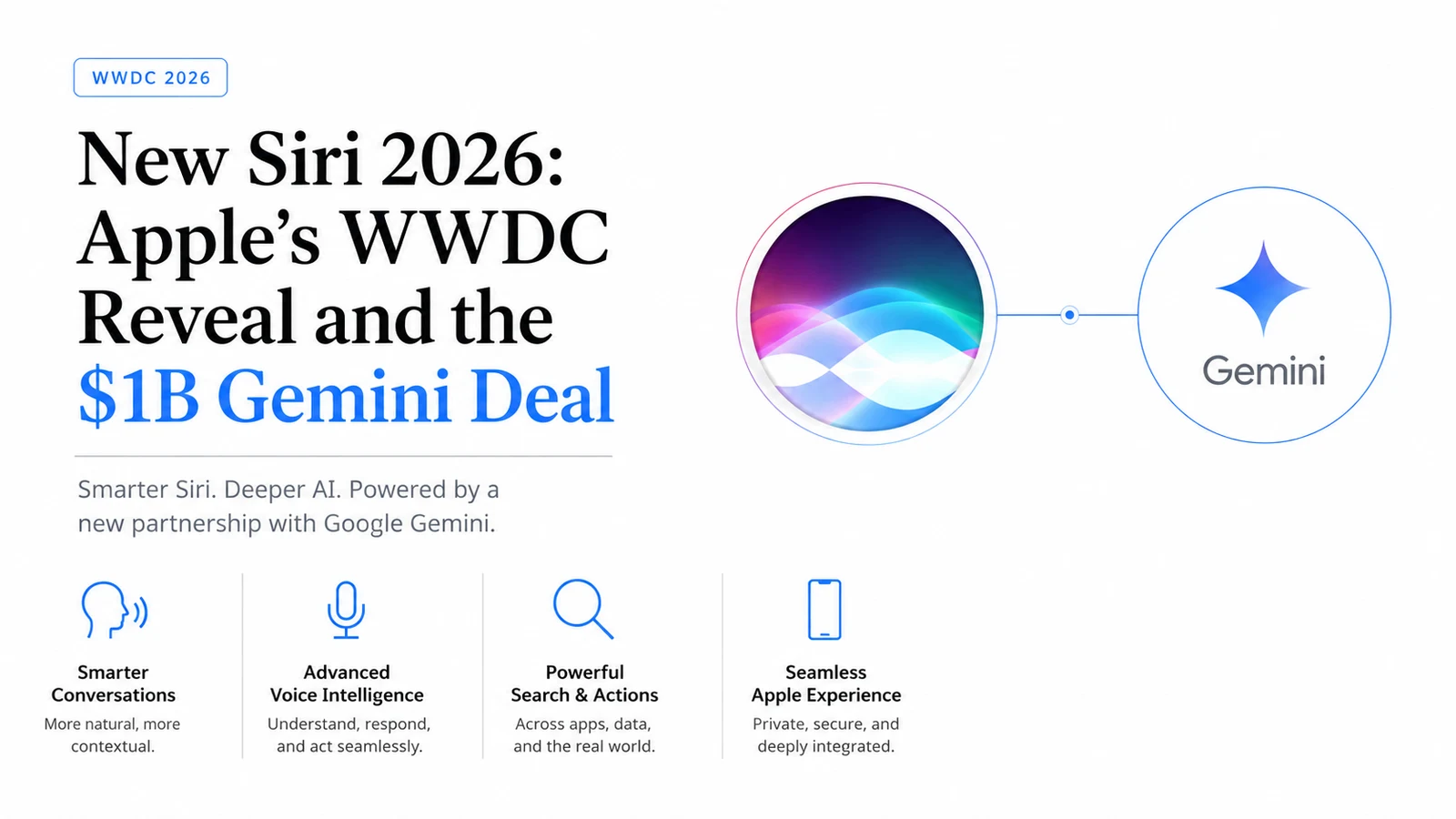
Apple WWDC 2026: Complete Siri AI Reveal & Gemini Deal
Apple WWDC 2026 introduced Siri AI powered by a Google Gemini model, iOS 27, Apple Intelligence upgrades, and a $1 billion licensing deal. See the recap.
Read articleBest Free AI Text-to-Speech 2026 (No Watermark)
The best free AI text-to-speech tools for 2026, tested by use case: real character limits, commercial rights, watermark facts, and open-source picks.
Read articleIs the AI Bubble Bursting? Big Tech's $725B Reckoning
Is the AI bubble bursting in 2026? Big Tech is set to spend ~$725B on AI as the Magnificent 7 shed $2.3T — the bull and bear case, no hype, no advice.
Read article