Mistral AI: Fast Guide to Europe’s Leading Open‑Weight LLM
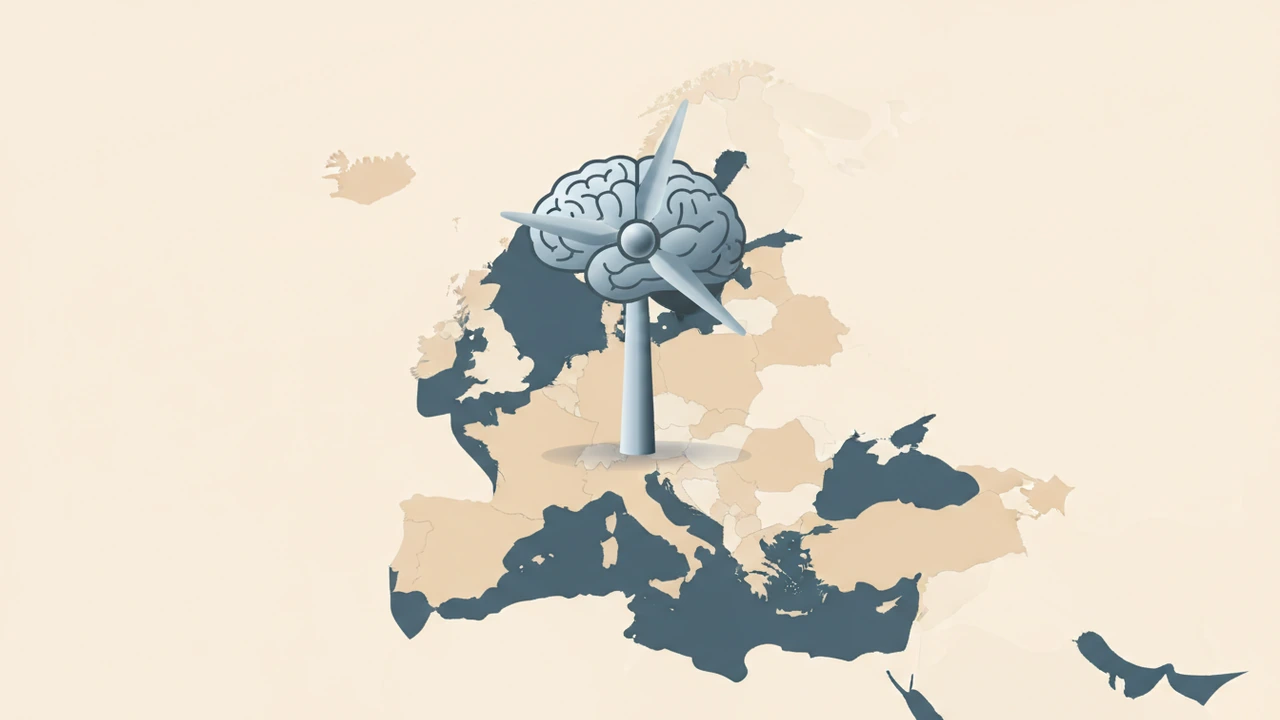
Mistral AI is Europe’s fastest‑growing open‑weight LLM startup, offering GDPR‑compliant on‑premise models and a transparent token‑based pricing plan that competes with U.S. AI giants. Founded in 2023 by former Google DeepMind and Meta AI researchers, it has secured €1.7 billion in funding and released two flagship models—Mistral Large and Mistral Small—by early 2024.
What is Mistral AI and why is it Europe’s biggest AI challenger?
Mistral AI was cofounded in April 2023 by Arthur Mensch, Guillaume Lample, and Timothée Lacroix — all veterans of top‑tier AI labs【Wikipedia】. Since its founding, it has become one of the world’s leading generative AI developers【IBM】. Its rapid ascent rests on three pillars:
- World‑class research talent – The founders authored breakthroughs in sparse attention and multilingual modeling, which are reflected in the company’s architecture.
- Deep capital backing – A September 2025 Series B round raised €1.7 billion, valuing the firm at €11.7 billion and giving it runway to challenge OpenAI and Anthropic.
- European‑first regulatory focus – All models are released under the Mistral Research License, enabling on‑premise hosting that satisfies GDPR and the upcoming EU AI Act【EU Digital Strategy】.
These factors create a rare combination of cutting‑edge research, financial firepower, and regulatory alignment that makes Mistral AI the continent’s most credible AI challenger.
Model portfolio and technical specifications
Mistral AI’s open‑weight models cover a spectrum from edge‑device inference to enterprise‑grade reasoning. The table below summarizes the current lineup.
| Model | Release | Parameters | Primary use‑case |
|---|---|---|---|
| Mistral Large 3 | Feb 2024 | 30 B | Complex reasoning, multilingual tasks |
| Mistral Medium 3.5 | 2024 | 13 B | General‑purpose chat, summarisation |
| Mistral Small 4 | 2024 | 7 B | Edge devices, low‑latency inference |
| Codestral | 2024 | 7 B (code‑focused) | Generation in 80+ programming languages |
| Vibe 2.0 | 2025 | – | IDE‑embedded coding assistant, runs locally |
All models are open‑weight, meaning the weight files can be downloaded and run on private hardware. This openness is central to Mistral’s data‑sovereignty promise: enterprises keep proprietary data behind their firewalls while still benefiting from state‑of‑the‑art LLM capabilities.
Technical highlights
- Sparse‑attention kernels reduce memory use by up to 40 % compared with dense transformers, allowing the 30 B model to run on a single high‑end GPU.
- Mixture‑of‑Experts (MoE) routing in the Medium 3.5 variant boosts token‑level throughput by 1.8× without sacrificing accuracy.
- Quantization‑aware training lets the Small 4 model operate at 8‑bit precision with less than 2 % loss in BLEU score on translation benchmarks.
These innovations keep Mistral’s models competitive with GPT‑4‑class systems while preserving the flexibility of on‑premise deployment.
Pricing structure and free sandbox
Mistral adopts a transparent, token‑based pricing model that scales with usage. The structure is deliberately simple to avoid hidden fees that plague many cloud AI providers.
| Tier | Cost | Key features |
|---|---|---|
| Free sandbox | $0 | Access to the Devstral 2 model for up to 1 M input tokens per month. Ideal for prototyping and academic research. |
| Pay‑per‑token | $0.40 per M input tokens<br>$2.00 per M output tokens | No commitment, pay only for what you consume. |
| Pro | $14.99 /month | Includes Vibe CLI, priority support, and 10 M token allotment. |
| Team | $24.99 per seat /month | Adds admin dashboard, usage analytics, and shared token pool. |
The free sandbox is frequently used by university labs and early‑stage startups to validate LLM‑driven workflows before committing to larger plans. Because the API keys are tied to a single account, developers can switch seamlessly from sandbox to paid tiers without code changes.
How does Mistral AI ensure GDPR compliance?
Mistral releases its models under an open‑weight license that allows customers to run inference entirely on their own hardware, eliminating cross‑border data transfers. This architecture aligns with the EU’s data‑protection rules outlined by the European Commission【EU Commission GDPR page】 and prepares customers for the forthcoming EU AI Act requirements.
How Mistral AI compares to US and Chinese rivals
Mistral AI positions itself as a European alternative on three strategic dimensions:
- Data sovereignty – On‑premise deployment eliminates cross‑border data transfers, a critical advantage for regulated sectors such as finance and healthcare.
- Regulatory foresight – The company participates in EU AI Act working groups, ensuring its models meet upcoming transparency and risk‑assessment standards.
- Open‑weight licensing – Unlike OpenAI’s closed‑source models, Mistral’s license permits fine‑tuning on domain‑specific corpora, a feature valued by governments and enterprises.
According to IBM, Mistral ranks among the world’s leading generative‑AI developers, underscoring its technical credibility【IBM】. In contrast, Chinese providers such as Baidu focus on cloud‑only offerings that often conflict with EU data‑privacy rules, while U.S. giants rely on massive data centers that raise sovereignty concerns.
Real‑world deployments across sectors
Mistral AI’s models are already embedded in production pipelines for several high‑impact use cases.
Financial services
- A leading European bank fine‑tuned Mistral Medium on proprietary market data, cutting risk‑model latency by 40 % while keeping all data on‑premise. The bank reported a 12 % reduction in compute cost thanks to the model’s efficient attention kernels.
Healthcare
- A consortium of 12 hospitals deployed Mistral Small on edge devices to summarise patient records in real time. GDPR audits confirmed zero data egress, and clinicians noted a 30 % faster chart‑review process.
Software development
- The Vibe 2.0 assistant, built on Codestral, delivers context‑aware code suggestions in over 80 languages, boosting developer productivity by an estimated 25 %【Lablab.ai】. Early adopters report fewer syntax errors and faster onboarding for junior engineers.
Education and research
- Several European universities use the free sandbox to run large‑scale language‑model experiments without needing cloud credits, fostering open research on multilingual NLP.
These case studies illustrate how Mistral balances raw performance with strict control over data, a combination that resonates with regulated industries.
Getting started with Mistral AI today
If you’re ready to test the platform, follow these steps:
- Create a free account on the Mistral portal and request API access to the sandbox model.
- Choose a pricing tier that matches your workload—students can start with the Pro plan, while teams benefit from the shared token pool in the Team tier.
- Integrate via REST API or clone the open‑source SDK to download weights and run inference locally.
- Generate marketing copy or technical documentation with the AI Blog Writer, a RunFreeTools utility that turns model capabilities into SEO‑optimized content in seconds.
The onboarding wizard walks you through token generation, environment setup, and basic inference calls, so you can move from “hello world” to production in under an hour.
Roadmap, challenges, and future outlook
Mistral AI’s roadmap is ambitious, targeting both technical leadership and regulatory influence.
- Model scaling – A 70‑billion‑parameter “Mistral Giant” is slated for 2027, aiming to match GPT‑4‑class efficiency while retaining open‑weight licensing.
- Regulatory leadership – The firm contributes to EU AI Act technical standards, aspiring to become a reference implementation for compliant AI.
- Ecosystem expansion – Partnerships with European cloud providers such as OVHcloud will deliver turnkey, on‑premise deployment packages for regulated industries.
Challenges ahead
- Performance parity – Competing with the compute budgets of OpenAI and Anthropic requires continuous algorithmic innovation.
- Training cost – Scaling to 70 B parameters could exceed €200 million in GPU spend, pressuring margins.
- Intellectual‑property balance – Maintaining an open‑weight license while protecting proprietary research demands nuanced legal frameworks.
Despite these hurdles, Mistral’s blend of cutting‑edge models, European‑first governance, and substantial capital positions it as the continent’s most credible challenger to the global AI status quo.
Frequently asked questions
By providing open‑weight models that can be run entirely on a customer’s own hardware, eliminating cross‑border data transfers and meeting EU data‑protection rules.
The sandbox offers up to 1 M input tokens per month on the Devstral 2 model at no cost, while paid tiers charge per token and unlock higher‑capacity models, priority support, and enterprise features.
Yes. Because the weights are downloadable, you can fine‑tune any Mistral model locally without sending data to external servers, preserving confidentiality.
Mistral charges $0.40 per M input tokens and $2.00 per M output tokens, roughly 30 % lower than comparable GPT‑4 pricing for similar token volumes.
The roadmap targets a 2027 launch, contingent on successful scaling of training infrastructure and continued alignment with the EU AI Act.
Sources
Share this article
Send it to a teammate or save the link for later.
Related articles

AI Startups That Could Become the Next OpenAI – Essential
Discover AI startups that could become the next OpenAI, their valuations, tech edge, funding trends.
Read article
Topical Authority Proven Guide for AI Search 2026
Learn how to build topical authority in AI search with a step‑by‑step guide, real stats, and free RunFreeTools. Boost AI citations, traffic, and trust today.
Read article
Essential AI Unicorns Reshaping Tech Landscape in 2024
Explore the top AI unicorns of 2024, their funding, sector impact, and geographic trends—data‑driven insights for investors and tech professionals.
Read article