How to Invest in OpenAI Before IPO: the ultimate guide
how to invest in openai before ipo is a question on many investors' minds as the AI powerhouse prepares for a future public offering. Understanding the available pathways can help you capture potential upside while managing risk.
How to invest in openai before ipo: Which route fits you?
Your investor status, budget, and risk tolerance dictate the best lane. The three primary avenues are:
- Registered funds that hold OpenAI – open to anyone, low minimums, but you own fund shares, not the private stock itself.
- Publicly traded proxies – buy a large shareholder (e.g., Microsoft) to get indirect exposure at market liquidity and low fees.
- Accredited‑only secondary marketplaces – purchase actual private shares via platforms like Forge, EquityZen, or Hiive, subject to high minimums and illiquidity.
Below is a concise comparison:
| Route | Who can use it | Minimum investment | Typical fees / liquidity | What you actually own |
|---|---|---|---|---|
| Fundrise Innovation Fund (VCX) | Anyone (non‑accredited OK) | ≈ $10 | Trades on NYSE; premium/discount to NAV; daily liquidity | Shares of a fund holding ~10 % OpenAI (2026 filing) |
| ARK Venture Fund (ARKVX) | Anyone (non‑accredited OK) | ≈ $500 | Quarterly redemptions; ~2.9 % net expense ratio | Fund shares with ~11 % OpenAI exposure |
| Public proxy – Microsoft (MSFT) | Anyone | 1 share | Full market liquidity; low transaction costs | Economic interest (~27 %) in OpenAI via Microsoft’s stake |
| Secondary marketplaces (Forge, EquityZen, Hiive) | Accredited investors only | $10,000 – $100,000+ | Illiquid until IPO or acquisition; platform fees 1‑3 % | Actual private shares or SPV interests in OpenAI |
| Closed‑end fund – Destiny Tech100 (DXYZ) | Anyone | 1 share | Trades like a stock; often 2‑3× NAV premium | Basket of private‑tech holdings, including OpenAI |
Can I buy OpenAI shares before the IPO?
Short answer: Direct shares are limited to accredited investors on secondary marketplaces. For non‑accredited investors, the only legal way to capture OpenAI’s upside is through the fund or proxy routes listed above.
The realistic routes, side by side
1. Funds anyone can buy
- Fundrise Innovation Fund (VCX) launched on the NYSE in March 2026. Its 2026 prospectus shows a 10 % stake in OpenAI, alongside Anthropic and other AI leaders. The fund’s price can trade at a discount (e.g., –4 % to NAV) or premium (+6 % to NAV), so checking the latest NAV is essential before buying.
- ARK Venture Fund (ARKVX), managed by Cathie Wood, reports an 11 % OpenAI allocation. Because it’s an interval fund, you can only redeem quarterly, and the 2.9 % expense ratio erodes returns over time.
- Destiny Tech100 (DXYZ) is a closed‑end fund that often trades at a premium. As of June 2026, its NAV was $19.97 per share while the market price hovered around $48.77, a 144 % premium that can quickly compress if investor sentiment shifts. See the SEC’s guidance on closed‑end fund pricing for more detail: SEC Investor Protection.
2. Publicly traded proxies (the low‑cost option)
- Microsoft (MSFT) holds roughly a 27 % economic interest in OpenAI, granting indirect exposure through a highly liquid, low‑fee stock.
- Amazon (AMZN) and Alphabet (GOOGL) each own sizable stakes in Anthropic, offering a similar proxy for that competitor.
While proxy exposure is diluted—OpenAI represents a small slice of Microsoft’s market cap—the trade‑off is daily liquidity, no fund fees, and the ability to use any brokerage account.
3. Secondary marketplaces (accredited‑only)
Platforms such as Forge Global, EquityZen, and Hiive enable accredited investors to buy actual private shares or SPV interests. Typical transaction sizes range from $10 k to $100 k, with platform fees of 1‑3 % plus any seller markup. Prices are opaque; recent deals for OpenAI have shown markups of 20‑30 % over the last private‑round valuation. The SEC warns investors about valuation opacity and potential fraud: SEC Investor Alert.
The risks nobody puts in the headline
- Illiquidity – Funds may only redeem quarterly; private shares can sit idle for years.
- Premiums & markups – Closed‑end funds and secondary marketplaces often trade above intrinsic value.
- Valuation opacity – Private‑round valuations are negotiated, not market‑driven; a “$850 billion” headline is a rough estimate, not a price you can test.
- Concentration – Many of these vehicles are heavily weighted toward a handful of AI names; a sector pullback can cause outsized losses.
- IPO uncertainty – A confidential filing does not guarantee a listing date or price.
Before committing, run the numbers through our AI Content Detector to ensure any promotional material you receive isn’t a fabricated scam.
“Guaranteed pre‑IPO shares” is the scam tell
The U.S. Securities and Exchange Commission repeatedly warns investors about pre‑IPO fraud. Red flags include:
- Guarantees of “cheap” shares below the expected IPO price.
- Claims of an imminent IPO (“this week” or “next month”).
- Unsolicited offers via social media, direct messages, or email.
- “Zero‑fee” promises that hide massive markups.
- Sellers who cannot prove ownership of the shares.
A 2023 investigation revealed a SpaceX‑themed scheme that defrauded over 4,000 investors of $500 million, with some buyers paying markups of up to 150 %【SEC Investor Alert】. The safest defense is to stick with regulated funds (VCX, ARKVX, DXYZ) or verified accredited platforms.
How to choose the best path for you
- Non‑accredited, low budget: Start with Fundrise Innovation Fund (VCX) at $10. Monitor the premium/discount to NAV before each purchase.
- Want pure OpenAI exposure with minimal fees: Buy Microsoft (MSFT) and treat it as a proxy.
- Accredited and comfortable with illiquidity: Explore Forge, EquityZen, or Hiive for actual private shares, but budget for a $10k‑$100k minimum and expect a multi‑year hold.
- Risk‑averse: Keep the majority of your portfolio in diversified index funds and allocate only a small speculative slice (5‑10 %) to any of the above routes.
Key takeaways
- Direct OpenAI shares are limited to accredited investors on secondary markets.
- Non‑accredited investors can gain exposure via VCX, ARKVX, DXYZ, or Microsoft.
- Always check fund NAV versus market price; premiums can erode returns.
- Beware of “guaranteed” pre‑IPO offers—most are scams flagged by the SEC.
- Model fees, premiums, and liquidity before investing; use our calculators to see the long‑term impact.
This content is for informational purposes only and does not constitute financial advice. Verify current holdings, fees, and regulatory status before investing.
Try the tool from this post
ROI Calculator
Return on investment and annualized ROI.
Open ROI CalculatorFrequently asked questions
No. Non‑accredited investors cannot purchase private shares directly. They can obtain indirect exposure through funds like Fundrise Innovation Fund (VCX) or ARK Venture Fund (ARKVX), or by buying proxy stocks such as Microsoft (MSFT) that hold sizable stakes.
Buying Microsoft (MSFT) on any brokerage gives the lowest‑cost, most liquid proxy to OpenAI’s performance. For a fund route, the $10 minimum VCX provides the next‑cheapest indirect exposure.
Yes. The SEC warns that guarantees, “imminent IPO” claims, and zero‑fee promises are classic red flags. Legitimate access is only through regulated funds or verified accredited‑investor platforms.
OpenAI filed a confidential draft IPO in early June 2026, citing a valuation range of $730‑$850 billion. A confidential filing does not set a public date, and the company may still delay or cancel the offering.
An interval fund, like ARK Venture Fund (ARKVX), allows periodic redemptions (usually quarterly) rather than daily liquidity. This structure lets the fund hold illiquid private‑company stakes—such as OpenAI—without needing to sell them on short notice.
Share this article
Send it to a teammate or save the link for later.
Related tools
Related articles
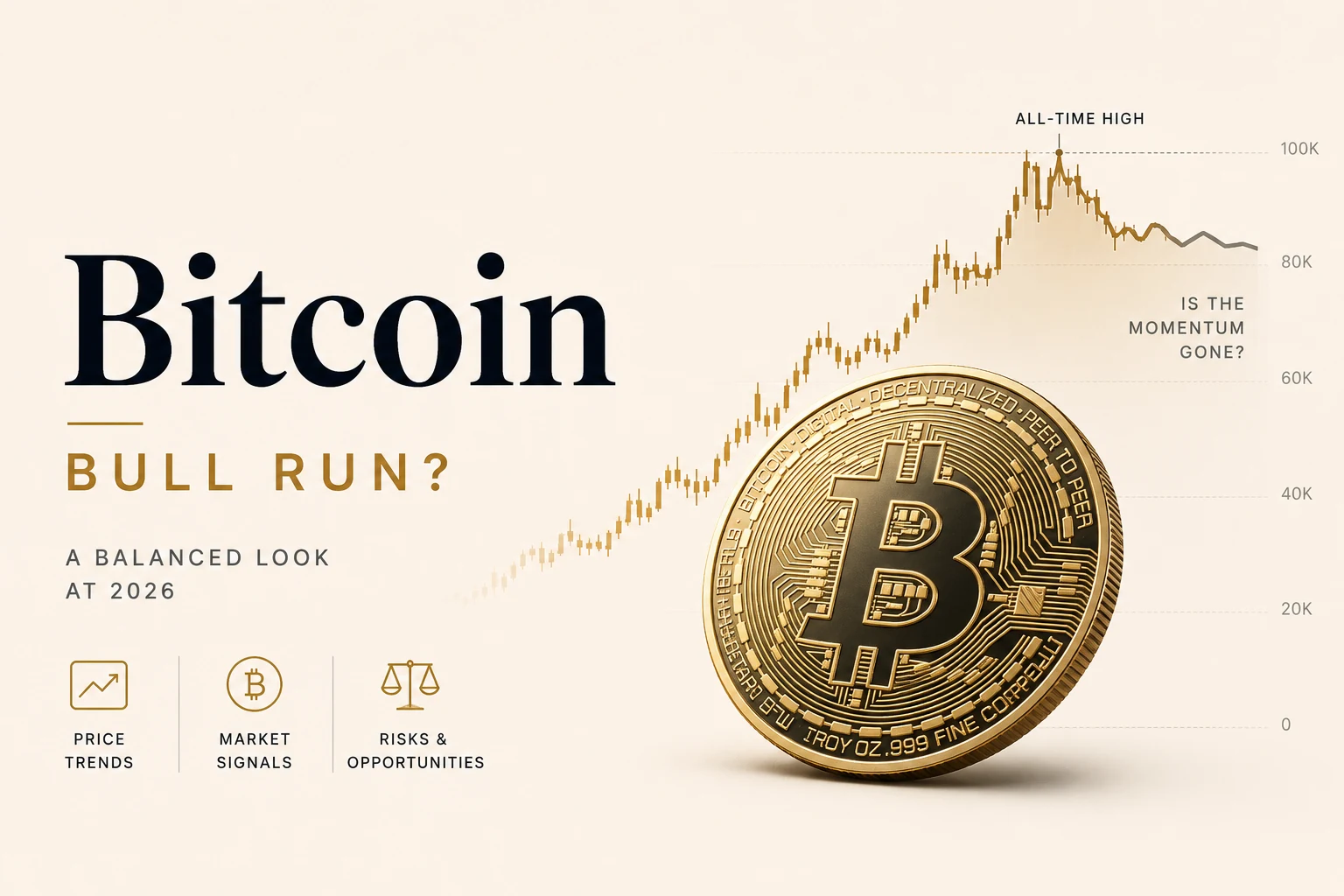
Is the Bitcoin Bull Run Over? The Ultimate 2026 Analysis
Is the bitcoin bull run over? In June 2026 Bitcoin sits near $65,000, a 48% drop from its October 2025 peak. Review the halving cycle, ETF outflows, lies ahead.
Read articleIs the AI Bubble Bursting? Big Tech's $725B Reckoning
Is the AI bubble bursting in 2026? Big Tech is set to spend ~$725B on AI as the Magnificent 7 shed $2.3T — the bull and bear case, no hype, no advice.
Read articleApple Lost a Major EU Antitrust Fight: What It Means
Apple lost a major EU antitrust ruling on July 8, 2026, upholding DMA rules on the iPhone. What's decided, what's still pending, and what changes for you.
Read article