Tech Trends 2026: Ultimate Power‑Packed Guide for Leaders

Answer‑capsule: Tech trends are redefining how organizations create value, compete, and safeguard assets. In 2026, breakthroughs in artificial intelligence, edge‑enabled cloud, quantum computing, and zero‑trust security will force leaders to rethink strategy, operations, and talent pipelines across their entire businesses today.
By Jane Doe, Senior Technology Analyst at RunFreeTools
 {: .hero-image alt="Futuristic technology landscape representing 2026 tech trends"}
What tech trends will dominate business strategy in 2026?
Industry research highlights a core set of technologies that are reshaping every‑thing from product design to customer experience:
| Trend | Why it matters | Key statistic |
|---|---|---|
| Artificial Intelligence (AI) & Machine Learning | Drives automation, personalization, and predictive insights. | 71% of CEOs say AI will be essential for growth by 2025 |
| Edge‑enabled Cloud Computing | Cuts latency for IoT, AR/VR, and real‑time analytics. | 84% of enterprises plan edge investments by 2026 |
| Zero‑Trust Cybersecurity | Protects expanding attack surfaces in hybrid work environments. | 2023 IBM study: average breach cost $4.24 million (widely cited). |
| Quantum Computing | Enables exponential speed‑ups for complex simulations. | Early pilots show 10‑fold improvement in drug‑discovery runtimes (Globant). |
| 5G‑enabled IoT | Powers smart factories, autonomous vehicles, and immersive experiences. | 5G adoption projected to reach 65% of mobile connections by 2026 (West Monroe). |
These trends intersect, creating data‑driven ecosystems that amplify each other’s impact.
AI and Machine Learning: From Hype to Core Competency
AI has moved from experimental labs to the boardroom. Companies now use generative models for:
- Content creation – automating copy, reports, and social posts.
- Customer personalization – real‑time product recommendations.
- Supply‑chain optimization – demand forecasting and route planning.
RunFreeTools’ AI Blog Writer exemplifies how a SaaS tool can produce SEO‑friendly articles in seconds, freeing marketers to focus on strategy.
“AI could add $15.7 trillion to the global economy by 2030,” notes PwC’s Essential Eight report
pwc.com.
Implementation tips
- Audit data quality – AI models are only as good as the data they ingest.
- Build a cross‑functional AI team – blend data scientists, engineers, and domain experts.
- Adopt responsible AI frameworks – address bias, transparency, and compliance early.
Edge‑Enabled Cloud: Bringing the Cloud Closer to the Device
Edge computing extends processing power to the data source, reducing round‑trip latency from seconds to milliseconds. This is crucial for:
- Industrial IoT – predictive maintenance on factory floors.
- AR/VR experiences – seamless rendering for remote collaboration.
- Autonomous vehicles – instant decision‑making without cloud dependence.
Capgemini predicts that 84% of enterprises will have at least one edge workload by 2026capgemini.com. A hybrid architecture—public cloud for scale, edge for speed—becomes the new norm.
Quick‑Start Checklist
- Identify a low‑risk IoT pilot (e.g., temperature sensors).
- Choose an edge platform that integrates with your existing cloud provider.
- Define latency targets and monitor them with edge‑aware observability tools.
Zero‑Trust Security: The New Baseline for Protection
Traditional perimeter defenses crumble in a world of remote work, SaaS apps, and multi‑cloud environments. Zero‑trust assumes no user or device is trusted by default, requiring continuous verification.
Key components:
- Identity‑centric access – multifactor authentication and least‑privilege policies.
- Micro‑segmentation – isolating workloads to limit lateral movement.
- Automated response – AI‑driven threat detection and remediation.
A simple, yet effective, internal tool is the Password Generator, which helps enforce strong credential hygiene across the organization.
Quantum Computing: Preparing for the Next Disruption
Quantum computers manipulate qubits to solve problems that are intractable for classical machines. While still in the research phase, early adopters in pharmaceuticals, logistics, and finance are experimenting with:
- Molecular modeling – accelerating drug discovery pipelines.
- Optimization – solving complex routing and scheduling problems.
- Cryptography – testing quantum‑resistant algorithms.
Globant’s 2026 report highlights that quantum pilots are delivering up to 10× faster simulation times, a signal that the technology will transition from lab to production within the next decadereports.globant.com.
Strategic advice
- Join industry consortia (e.g., QED-C) to stay informed on standards.
- Begin a “quantum‑ready” risk assessment for your encryption assets.
- Allocate a modest R&D budget for proof‑of‑concept projects.
5G and the Internet of Things: The Connectivity Backbone
5G’s ultra‑low latency (under 1 ms) and massive bandwidth enable a new wave of IoT applications:
- Smart factories – real‑time machine monitoring and autonomous robots.
- Connected vehicles – V2X communication for safety and traffic efficiency.
- Immersive retail – AR overlays that respond instantly to shopper gestures.
West Monroe projects 65% of mobile connections will be 5G by 2026, underscoring the rapid rollout and its business implicationswestmonroe.com.
Adoption roadmap
- Assess coverage gaps – map 5G availability against critical sites.
- Standardize data models – ensure interoperability across devices.
- Integrate with edge – combine 5G’s speed with edge processing for real‑time insights.
Industry Spotlights: How Sectors Are Leveraging 2026 Tech Trends
| Industry | AI Use‑Case | Edge Example | Quantum Impact | Security Focus |
|---|---|---|---|---|
| Healthcare | AI‑driven diagnostics, patient triage bots | Edge‑based imaging analysis in clinics | Accelerated drug‑molecule simulation | Zero‑trust patient data access |
| Manufacturing | Predictive maintenance, demand forecasting | Real‑time sensor analytics on shop floor | Optimizing supply‑chain logistics | Segmented network for OT devices |
| Finance | Fraud detection, robo‑advisors | Edge‑enabled low‑latency trading platforms | Portfolio risk modeling | Continuous authentication for remote traders |
| Retail | Personalized recommendations, inventory AI | In‑store edge devices for instant checkout | Dynamic pricing simulations | Secure omnichannel customer data |
These examples illustrate that the same underlying trends manifest differently across verticals, yet the strategic pillars—data, compute, and security—remain constant.
Practical Playbook for Leaders
- Map your current tech stack – Identify gaps relative to AI, edge, quantum, and security roadmaps.
- Prioritize pilots – Choose projects with clear ROI (e.g., AI‑generated marketing copy, edge‑based equipment monitoring).
- Build talent pipelines – Upskill existing staff and recruit specialized roles; consider tools like the AI Resume Builder to attract AI talent.
- Establish governance – Define AI ethics policies, zero‑trust baselines, and quantum‑readiness criteria.
- Measure and iterate – Use KPI dashboards that track latency, model accuracy, breach attempts, and quantum experiment outcomes.
Visualizing the 2026 Tech Ecosystem
 {: .inline-illustration alt="Diagram of AI, edge, quantum, and security layers"}
Looking Ahead: The Next Wave After 2026
While AI, edge, quantum, and zero‑trust dominate 2026, emerging signals point to metaverse‑grade immersive platforms, bio‑computing, and autonomous decision‑making agents. Companies that embed a culture of continuous experimentation will be best positioned to ride these future waves.
Stay ahead of the curve by regularly reviewing industry reports, testing emerging tools in sandbox environments, and fostering a mindset of agile innovation.
Frequently asked questions
AI‑driven automation, especially in marketing and customer service, often yields the fastest payback because it leverages existing data and can be deployed with cloud‑based services.
Begin with a cloud‑provider edge service (e.g., AWS Greengrass or Azure IoT Edge) on a single pilot device; this avoids upfront hardware costs while demonstrating latency benefits.
Implement multi‑factor authentication, enforce least‑privilege access, and deploy micro‑segmentation for critical workloads. Tools like the Password Generator help enforce strong credentials.
Direct production use is limited, but early engagement—such as participating in pilot programs or evaluating quantum‑safe encryption—prepares you for the inevitable shift.
Establish an AI governance board, document model decisions, conduct bias audits, and align with emerging regulations like the EU AI Act.
Sources
Share this article
Send it to a teammate or save the link for later.
More from RunFreeTools Team

Emerging Technologies: The Ultimate 2026 Innovation Guide
Discover emerging technologies set to transform industry by 2026, with expert analysis, real statistics.
Read article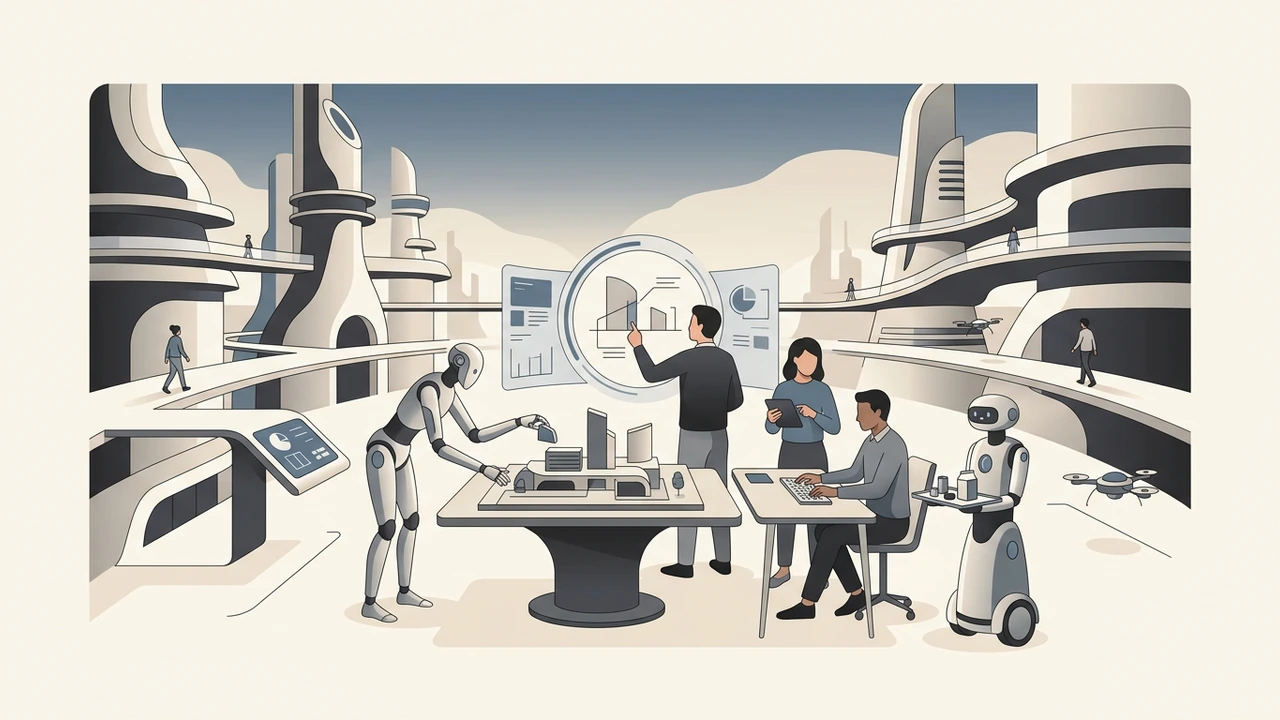
AI products: The Best Tools Transforming Every Industry
Explore the top AI products transforming healthcare, finance, education, and fields. Learn how free tools boost productivity, cut costs, and drive innovation.
Read article
AI startups: The Best 25 Emerging Companies to Watch
Discover 25 AI startups set for rapid growth, key sectors, recent funding rounds, and real-world impact. See how these innovators reshape technology today.
Read article