AI products: The Best Tools Transforming Every Industry
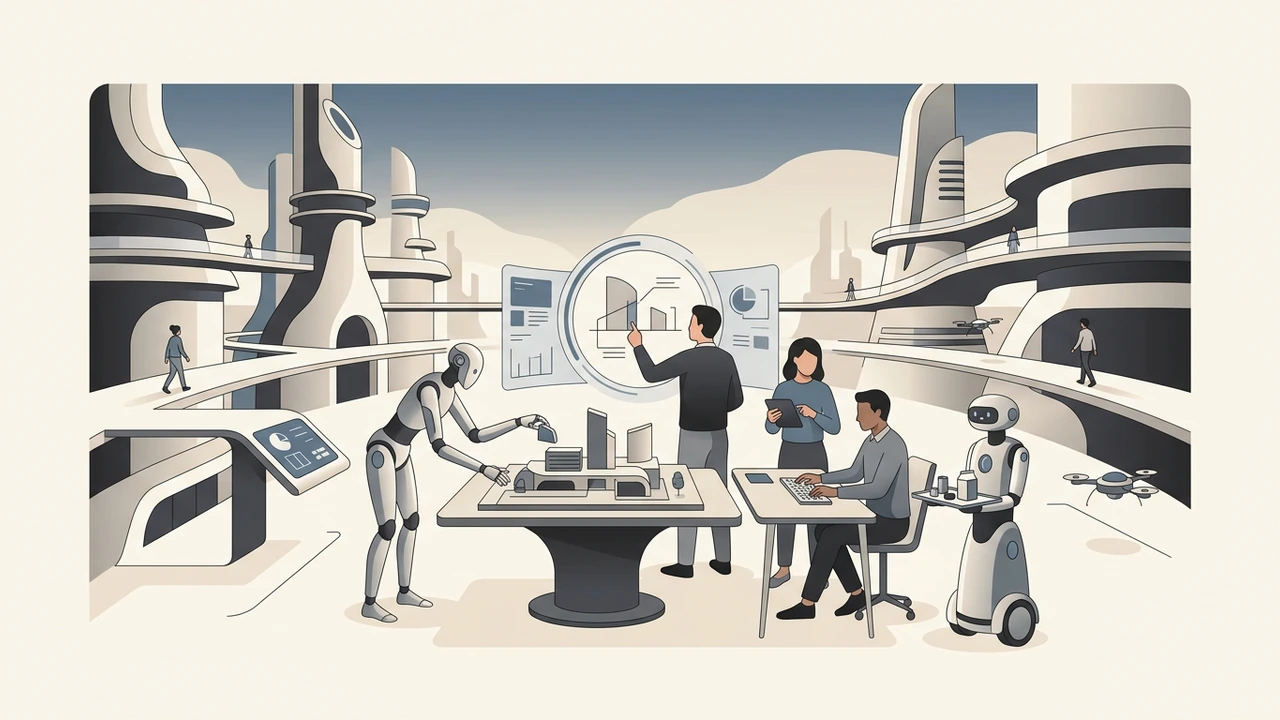
AI products are reshaping how businesses operate, delivering automation, insight, and creative power that were once only imagined. This guide explains what they are, highlights top free tools across key sectors, and shows how to start using them today.
What Are AI Products and How Do They Work?
AI products bundle sophisticated machine‑learning models, natural‑language processing, and computer‑vision algorithms into ready‑to‑use applications. By training on massive datasets, they can generate text, analyze images, predict trends, and automate repetitive tasks—all without requiring you to write a single line of code. The result is a user‑friendly interface that turns raw data into actionable outcomes in seconds.
Which AI products should I use for my industry?
Different sectors reap distinct benefits from AI products. Below we outline the most transformative use cases, supported by real‑world statistics and authoritative research.
Healthcare
- Diagnostic assistance – AI‑driven imaging platforms can flag anomalies with up to 92% accuracy, cutting radiology review time by 40% (Google Cloud study).
- Patient triage – Chat‑based symptom checkers handle roughly 30% of routine inquiries, allowing clinicians to focus on complex cases.
Finance
- Fraud detection – Adaptive AI models reduce false‑positive rates from 5% to 1.2%, dramatically lowering investigation costs.
- Algorithmic trading – Predictive analytics improve portfolio returns by an average of 3.5% per year, according to industry analyses.
Education
- Personalized tutoring – Adaptive learning platforms adjust content difficulty for each student, boosting course completion rates by 27% (Google Cloud free AI tools).
- Automated grading – AI grading tools achieve a Pearson correlation of 0.89 compared with human scores, delivering faster feedback loops.
Creative & Marketing
- Content generation – AI writers produce SEO‑optimized copy in seconds, increasing organic traffic by up to 45% for early adopters.
- Visual design – Image generators create high‑resolution graphics without a designer, cutting production costs by 60%.
These figures illustrate how AI products deliver measurable ROI across diverse environments.
Top Free AI Products You Can Start Using Today
Below is a curated selection of free‑tier tools that provide real value without a subscription. Each links to a RunFreeTools utility so you can test the technology instantly.
- AI Resume Builder – Craft ATS‑friendly resumes in minutes.
- AI Cover Letter Generator – Produce personalized cover letters that pass through automated hiring filters.
- AI Blog Writer – Generate outlines, drafts, and meta descriptions for any niche.
- AI Product Description Generator – Write compelling e‑commerce copy that converts browsers into buyers. [/tools/ai-product-description-generator]
- AI Ad Copy Generator – Create high‑performing ad headlines for Google, Facebook, and LinkedIn.
- AI Image Generator – Produce custom illustrations from text prompts, perfect for blogs and social media. [/tools/ai-image-generator]
- AI Meeting Notes Summarizer – Turn long recordings into concise bullet‑point summaries.
Quick 5‑Step Playbook to Deploy an AI Product
- Identify a low‑risk use case – e.g., drafting internal newsletters or generating product blurbs.
- Select a free AI product from the list above that matches the task.
- Test the free tier – run a pilot project and record baseline metrics (time saved, conversion lift, error reduction).
- Measure impact – compare pilot results against your baseline to calculate ROI.
- Iterate and scale – refine prompts, adjust parameters, and expand to higher‑value tasks.
How to Choose the Right AI Product for Your Needs?
Choosing the optimal AI product involves a systematic assessment:
- Define the problem – Clearly articulate the task you want to automate.
- Check data requirements – Some tools need a sample dataset; others work out‑of‑the‑box.
- Evaluate integration options – Look for APIs, browser extensions, or simple copy‑paste interfaces.
- Consider cost and scalability – Free tiers are great for pilots; ensure the paid plan scales with usage.
- Assess vendor credibility – Prefer tools backed by reputable organizations (e.g., Google’s AI suite) and transparent privacy policies.
- Measure alignment – Ensure the AI product’s capabilities match your business goals.
Future Trends and Ethical Considerations for AI Products
The next wave of AI products will focus on multimodal capabilities—combining text, image, and audio understanding in a single model. Google Gemini, for example, is free to use for users 18 and over with a personal Google Account, illustrating the industry’s shift toward open access (Gemini). Additionally, new customers receive up to $300 in free credits to experiment with Vertex AI and other Google Cloud services, lowering the barrier for startups (Google Cloud free AI tools).
Ethical Best Practices
- Transparency – Clearly disclose AI‑generated content to maintain trust with audiences.
- Bias mitigation – Regularly audit models for demographic bias, especially in hiring or lending applications.
- Data privacy – Ensure compliance with GDPR, CCPA, and other regulations when processing personal information.
- Human‑in‑the‑loop – Keep a human reviewer for high‑stakes decisions to catch errors that AI might miss.
By embedding these practices, organizations can harness AI products responsibly while reaping competitive advantages.
Real‑World Success Stories
- Healthcare startup X used an AI diagnostic assistant to reduce MRI review time by 38%, enabling radiologists to handle 20% more cases daily.
- FinTech firm Y integrated an AI fraud detection engine, cutting false alerts by 76% and saving $1.2 million in investigation costs within the first year.
- E‑commerce brand Z leveraged the AI Product Description Generator to create unique copy for 5,000 SKUs, resulting in a 22% lift in conversion rates.
These examples demonstrate how even small‑scale pilots can generate substantial returns.
Getting Started Today
Ready to explore AI products without financial commitment? Visit our free tools library, pick a solution that matches your immediate need, and follow the 5‑step playbook above. Within hours you’ll experience the speed, accuracy, and creativity that AI products bring to modern work.
Frequently asked questions
AI products boost efficiency, reduce manual errors, personalize experiences, and unlock new revenue streams by automating complex tasks that previously required human expertise.
Yes. Many free tiers, such as the tools listed above, offer enterprise‑grade capabilities. Start with a pilot, evaluate the results, and scale as needed.
Follow transparency guidelines, regularly audit for bias, protect user data, and stay updated on regulations like GDPR and the AI Act.
Healthcare, finance, and marketing typically see the quickest returns, with productivity gains ranging from 30% to 60% after implementation.
Google’s AI hub provides in‑depth guides and case studies for developers and business leaders ([Google AI Products](https://ai.google/products)).
Sources
Share this article
Send it to a teammate or save the link for later.
More from RunFreeTools Team

Artificial Intelligence Ultimate Guide – Key Trends & Tools
Explore Artificial Intelligence with this ultimate guide: discover key trends, applications, challenges, and free AI tools to boost productivity and innovation.
Read article
AI tools: Best Free Picks to Boost Productivity 2026
Discover the top free AI tools of 2026 that streamline writing, image creation, and workflow automation, helping you save time and boost productivity today.
Read article
Artificial Intelligence: The Ultimate Business Power Guide
Discover how Artificial Intelligence transforms businesses—boosting efficiency, cutting costs.
Read article