How to Convert PDF to Word Free (No Uploads)
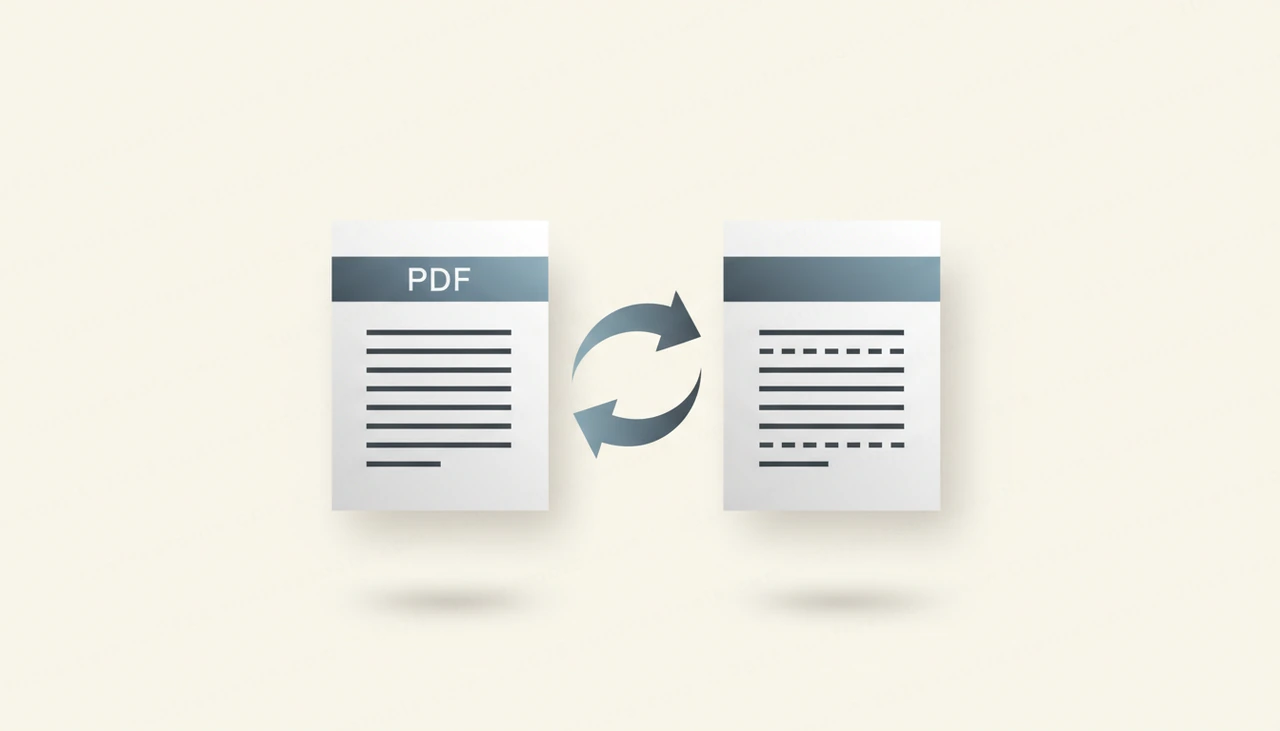
You have a PDF open, you spot a typo or need to reuse a paragraph, and then you hit the wall: PDFs are built to be read, not edited. Copying text out by hand is slow and error-prone, and most online converters ask you to upload your file to a stranger's server first. There is a faster, safer way to convert PDF to Word free without handing your documents to anyone.
Why People Convert PDF to Word
PDFs are great for sharing because they look the same everywhere. That strength becomes a problem the moment you need to change something. The most common reasons people want to convert PDF to Word free include:
- Fixing typos or updating numbers in a document you no longer have the original of
- Reusing paragraphs from a report, proposal, or resume without retyping them
- Translating, summarizing, or quoting text in another file
- Reformatting content to match a new template or brand
- Making a document accessible so a screen reader can work with the text
In every case the goal is the same: turn locked, read-only content into editable text you can actually work with.
Text-Based vs Scanned PDFs
Before you convert anything, it helps to know which kind of PDF you have, because the two behave very differently.
A text-based PDF is created digitally, usually exported from Word, Google Docs, a browser, or design software. The text is stored as real characters under the hood, so it can be selected, searched, and extracted cleanly.
A scanned PDF is really a photo of a page. When you scan a contract or snap a picture of a printed sheet, the result looks like text but is actually an image. A standard converter cannot read those pixels as words without optical character recognition (OCR).
Quick test: open your PDF and try to select a sentence with your cursor. If the text highlights, it is text-based and will convert well. If your selection grabs the whole page as one block or nothing at all, it is scanned.
What Gets Preserved and What Does Not
It is worth setting expectations so you are not surprised by the result. A free in-browser converter focuses on pulling out clean, editable text rather than rebuilding the page perfectly.
What usually comes through well:
- Body paragraphs and headings as editable text
- Reading order for simple, single-column documents
- Basic line and paragraph breaks
What often shifts or drops out:
- Complex multi-column layouts and sidebars
- Tables, which may lose their grid and flatten into rows of text
- Images, logos, and charts
- Exact fonts, colors, and precise spacing
Think of the output as a clean starting point you can edit, not a pixel-for-pixel clone. For most editing and reuse tasks, editable text is exactly what you want anyway.
Why In-Browser Conversion Protects Your Privacy
Most "free" PDF converters work by uploading your file to a remote server, processing it there, and sending a download back. That means your document, which might be a tax form, a signed contract, or a medical letter, lands on a third-party machine you do not control. You are trusting their retention policy, their security, and their promises.
The PDF to Word tool on RunFreeTools takes a different approach. The entire conversion runs locally in your browser using your own device's processing power. Your file is never uploaded, never stored, and never seen by us or anyone else. For sensitive documents that distinction matters: nothing can leak from a server that never received your file in the first place. It also means the tool keeps working even on a flaky connection, since the heavy lifting happens on your side.
How to Convert a PDF to Word, Step by Step
Here is the full process. It takes well under a minute for a typical document.
- Open the PDF to Word tool in your browser. There is nothing to install and no account to create.
- Drag your PDF onto the upload area, or click to browse and pick the file from your device. Because everything stays local, this just loads the file into the page.
- Wait a moment while the tool reads the PDF and extracts its text. Larger files with many pages take a little longer.
- Review the detected text in the preview so you can confirm it pulled the content you expected.
- Click the button to download your editable .docx file.
- Open the file in Microsoft Word, Google Docs, LibreOffice, or any compatible editor and start editing.
That is the whole flow to convert PDF to Word free, start to finish, with your data never leaving your machine.
Tips for the Best Results
A few small habits make a big difference in the quality of your converted file:
- Start with a text-based PDF whenever possible. If you only have a scanned copy, look for an original digital export instead.
- For documents with heavy tables or columns, paste the extracted text into your editor and rebuild the structure rather than fighting the original layout.
- Convert one document at a time so you can check each result before moving on.
- After converting, do a quick proofread. Stray line breaks from the original page width are common and take seconds to fix.
- Keep your source PDF until you have confirmed the Word file has everything you need.
If you regularly work with these files, it is worth exploring the other free PDF tools for merging, splitting, and compressing, or browsing the full set of all tools for everyday tasks.
Conclusion
Converting a PDF into editable text should be quick, free, and private, not a trade where you hand over your documents to get a download link. With an in-browser converter you get clean, editable text in a .docx file while your file stays entirely on your device. When you are ready to turn a locked PDF into something you can actually edit, open the PDF to Word tool and convert your file in seconds, with no uploads and no sign-up.
Frequently asked questions
Is it really free to convert PDF to Word?
Yes. The PDF to Word tool on RunFreeTools is completely free with no account, no watermark, and no daily limit. It runs in your browser, so you can convert as many files as you need.
Are my files uploaded to a server?
No. The conversion happens entirely inside your browser using your own device. Your PDF never leaves your computer, which makes it safe for contracts, statements, and other private documents.
Can it convert scanned PDFs into editable text?
A scanned PDF is an image of text, so a standard text extractor cannot read it without OCR. The tool works best on text-based PDFs created from a digital document. Scanned pages may produce little or no editable text.
Will the Word file look exactly like my PDF?
The goal is editable text, not a pixel-perfect copy. Paragraphs and basic structure carry over well, but complex multi-column layouts, tables, and images may shift or be left out. Expect to do light formatting cleanup.
Share this article
Send it to a teammate or save the link for later.