Why Is RAM So Expensive in 2026? Price Surge Explained
Why Is RAM So Expensive Right Now? The 2026 Price Surge Explained
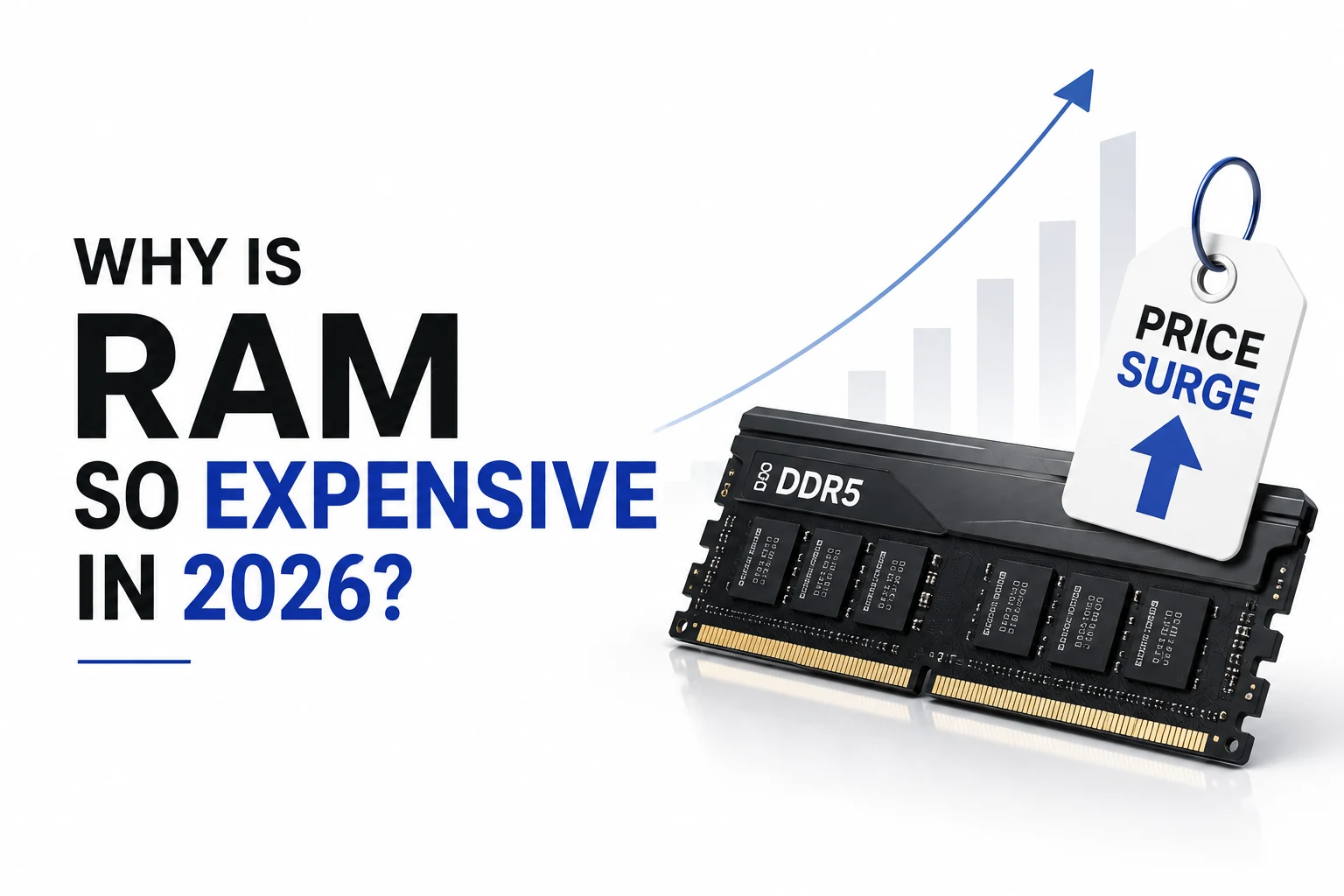
RAM is so expensive right now because memory makers Samsung, SK Hynix, and Micron have redirected huge amounts of factory capacity toward high-bandwidth memory (HBM) for AI data centers, starving the supply of everyday DDR5 and DDR4. The result: DRAM contract prices jumped roughly 90 percent in Q1 2026 and another 58 to 63 percent in Q2, according to TrendForce. A 32GB DDR5 kit that sold for $80 to $120 a year ago now starts around $375 at U.S. retail. This guide breaks down exactly what is driving the surge, how much prices rose, who feels it most, and when relief might finally arrive.
How much have RAM prices actually risen in 2026?
The numbers are brutal across every category of memory. This is not a small bump or seasonal wobble. It is the steepest sustained memory price climb in well over a decade.
Here is a snapshot of where common kits stand now versus roughly a year ago, based on retail tracking and contract data from Tom's Hardware and supply-chain reports.
| Memory kit | ~Mid 2025 price | Late June 2026 price | Approx. change |
|---|---|---|---|
| 32GB DDR5-6000 (2x16GB) | $80 to $120 | ~$375 and up | +200% to +350% |
| 16GB DDR5 (single) | ~$45 to $60 | ~$130 to $180 | roughly 2x to 3x |
| 32GB DDR4 (2x16GB) | $60 to $90 | ~$150 to $180 | roughly 2x |
| 64GB DDR5 server RDIMM | baseline | up to ~2x by year end | up to +100% |
On the wholesale side, the trend is the same. TrendForce reported that conventional DRAM contract prices climbed about 90 to 95 percent quarter over quarter in Q1 2026, then a further 58 to 63 percent in Q2. NAND flash, which powers SSDs, is not far behind at 70 to 75 percent for Q2. Samsung's own list pricing tells the story too: the company raised its 32GB DDR5 module from $149 to $239 last September, a 60 percent jump, as reported by Network World.
What is actually causing the RAM price surge?
The short answer is AI. The longer answer is that AI demand has rewired the entire memory industry around a single, far more profitable product.
AI and HBM are eating DDR5 capacity
Modern AI accelerators rely on HBM, a stacked, ultra-fast memory that sits next to the GPU. HBM and standard DDR5 are made from the same DRAM wafers in the same fabs, so every wafer that becomes HBM is a wafer that does not become a consumer memory stick. The catch is that HBM consumes far more of that wafer capacity. Micron has pointed to roughly a 3-to-1 conversion ratio, meaning each gigabyte of HBM eats about three times the capacity of ordinary DRAM. Reports indicate HBM is on track to absorb a fifth or more of total DRAM output in 2026.
The economics make the choice obvious for manufacturers. A single HBM3E stack can sell for $60 to $100, while a comparable amount of conventional DDR5 fetches only around $5 to $10. When the high-end product carries margins several times richer than the commodity one, factory capacity follows the money.
Memory makers deliberately tightened supply
This is not only an accident of demand. Samsung, SK Hynix, and Micron spent 2023 and 2024 cutting output to clear a glut, and they have been slow to add new commodity capacity. SK Hynix said during an earnings call that its HBM, DRAM, and NAND capacity is "essentially sold out" for 2026. Micron has stepped back from the consumer and commodity DRAM market to focus on enterprise and AI customers. With the big three prioritizing data-center orders, there simply are not enough chips left for the retail channel.
Cloud giants locked up the supply early
The hyperscalers saw this coming. North American cloud providers are racing to deploy AI inference at scale, and many signed long-term agreements that secure memory at fixed volumes, TrendForce notes. These buyers have shown they will pay up and commit early to guarantee supply. That leaves PC builders and smaller OEMs competing for whatever is left on the spot market, where prices move fastest.
Why is DDR4 going up too, if AI uses DDR5?
It seems backward. AI servers do not use old DDR4, yet DDR4 prices have roughly doubled since late 2025. The reason is a supply squeeze, not a demand spike.
As manufacturers pivot their newest, most efficient production lines to DDR5 and HBM, they have wound down legacy DDR4 output. Samsung and SK Hynix issued end-of-life notices for several DDR4 lines, even while extending a few to ease the transition. Less DDR4 coming off the lines, combined with steady demand from older PCs, industrial equipment, and budget laptops, pushed prices up sharply. A 32GB DDR4 kit that cost $60 to $90 in October 2025 ran $150 to $180 by January 2026. Gartner has forecast DRAM prices rising on the order of 47 to 50 percent in 2026 because of this undersupply in legacy and mainstream parts.
Who is hit hardest by expensive RAM?
The pain spreads well beyond enthusiast PC builders, though they feel it first and most visibly.
- PC builders and gamers. Memory has flipped from an afterthought to one of the priciest parts in a build. A 32GB kit that once cost less than a midrange game now rivals the price of a graphics card tier. Anyone speccing a new rig in mid 2026 should budget two to four times what they would have a year ago.
- Laptop and prebuilt buyers. Major brands warned of "mounting pressure from rising memory costs." Expect higher prices on new laptops and desktops, thinner configurations at a given price, and fewer cheap high-capacity options.
- Smartphone buyers. Mobile DRAM (LPDDR5X) is rising fast as suppliers pursue catch-up pricing. Reports put some mobile memory increases near 89 percent in a single quarter. Flagship phones with large memory pools are the most exposed.
- SSD and storage buyers. NAND is climbing alongside DRAM, so SSD prices are rising too. A full system upgrade now gets hit on two fronts at once.
When will RAM prices drop?
This is the question every buyer is asking, and the honest answer is: not soon. The analyst consensus is unusually unanimous.
TrendForce, Gartner, and IDC all expect memory prices to stay elevated through 2026, with no meaningful relief during the year. The earliest credible window for normalization is late 2027, when new fabrication capacity from the major makers is scheduled to begin ramping. Some forecasts stretch the recovery into 2028, because building and qualifying a new fab takes years, not months, and AI demand shows no sign of cooling.
In other words, late June 2026 looks more like the middle of the surge than the peak. Anyone waiting for a quick return to 2024 prices will likely be waiting a long time.
Should you buy RAM now or wait?
There is no universal answer, but the math points in a clear direction for most people.
- Buy now if you need it. If you are building or upgrading a system you will use this year, waiting is unlikely to save money and may cost more. Prices are still trending up, not down, and stock of cheaper kits keeps thinning.
- Buy the capacity you actually need. This is not the year to overspend on a 64GB kit "just in case." Match your memory to your real workload to avoid paying a premium for headroom you will not use.
- Consider DDR4 and used or refurbished kits. If your platform supports DDR4, it can still be the cheaper path despite its own increases. Reputable used memory is another way to soften the blow.
- Only wait if your purchase is flexible. If you can comfortably postpone past 2027, that is when the first real relief may appear. For everyone on a 2026 timeline, hoping for a near-term crash is a gamble against a unanimous analyst forecast.
Before you buy, it helps to know exactly how much memory your tasks actually require. You can sanity-check a build's specs and avoid overbuying with a quick reference, then size your kit to your real needs rather than the marketing default.
Bottom line
RAM is expensive in 2026 because AI has hijacked the memory supply chain. HBM for data-center accelerators is far more profitable than consumer DDR5, so Samsung, SK Hynix, and Micron have funneled capacity toward it, while cloud giants lock up what remains through long-term deals. That pushed DRAM contract prices up roughly 90 percent in Q1 and another 58 to 63 percent in Q2 2026, dragging retail kits to two to four times their 2024 lows, and even old DDR4 has doubled. With no meaningful relief expected before late 2027 at the earliest, the practical takeaway is simple: if you genuinely need memory this year, buy what you need now and do not overspend on capacity. Waiting for prices to crash is, for now, a losing bet.
Frequently asked questions
RAM is expensive because Samsung, SK Hynix, and Micron shifted factory capacity toward high-bandwidth memory (HBM) for AI data centers, which is far more profitable than consumer DDR5. HBM and DDR5 share the same DRAM wafers, so the AI boom directly cut the supply of everyday memory. Cloud providers also locked up much of the remaining supply through long-term contracts.
DRAM contract prices rose roughly 90 percent quarter over quarter in Q1 2026 and another 58 to 63 percent in Q2, according to TrendForce. At retail, a 32GB DDR5 kit that cost $80 to $120 a year ago now starts around $375, a two-to-four-times increase. Even older DDR4 has roughly doubled since late 2025.
Analysts at TrendForce, Gartner, and IDC do not expect meaningful relief in 2026. The earliest credible window for prices to normalize is late 2027, when new fab capacity ramps up, and some forecasts extend recovery into 2028. AI demand remains strong, so a fast return to 2024 prices is unlikely.
AI servers do not use DDR4, but manufacturers wound down legacy DDR4 production to free capacity for DDR5 and HBM. Samsung and SK Hynix issued end-of-life notices for several DDR4 lines, shrinking supply while older PCs and industrial gear still need it. That squeeze roughly doubled DDR4 kit prices between late 2025 and early 2026.
If you need memory for a system you will use this year, buy now, because prices are still rising and relief is not expected before late 2027. Buy only the capacity you actually need rather than overspending on headroom. Waiting makes sense only if your purchase is flexible and can be postponed past 2027.
HBM (high-bandwidth memory) is stacked, ultra-fast memory used by AI accelerators. It is made from the same DRAM wafers as consumer DDR5 but consumes about three times the capacity per gigabyte and sells for far more, so manufacturers prioritize it. That diverts wafers away from standard RAM, creating the consumer shortage.
Yes. Major laptop and smartphone brands warned of mounting pressure from rising memory costs. Mobile DRAM (LPDDR5X) has surged sharply, with some quarterly increases reported near 89 percent. Expect higher prices, thinner memory configurations, and fewer cheap high-capacity options on new devices.
The surge is expected to last through 2026 and likely well into 2027. Adding new memory fabrication capacity takes years, and demand from AI data centers keeps growing. The consensus among major analysts is that late June 2026 is closer to the middle of the surge than the end of it.
Share this article
Send it to a teammate or save the link for later.
Related articles
Is the AI Bubble Bursting? Big Tech's $725B Reckoning
Is the AI bubble bursting in 2026? Big Tech is set to spend ~$725B on AI as the Magnificent 7 shed $2.3T — the bull and bear case, no hype, no advice.
Read articleApple Lost a Major EU Antitrust Fight: What It Means
Apple lost a major EU antitrust ruling on July 8, 2026, upholding DMA rules on the iPhone. What's decided, what's still pending, and what changes for you.
Read articleBest AI Browser 2026: Comet vs Dia vs Chrome (Atlas Dies)
The best AI browser in 2026? Comet is free and cross-platform, Chrome adds Gemini, and ChatGPT Atlas shuts down Aug 9 — plus the safety risks.
Read article