What is Vibe Coding: The Ultimate 2026 Guide for developers
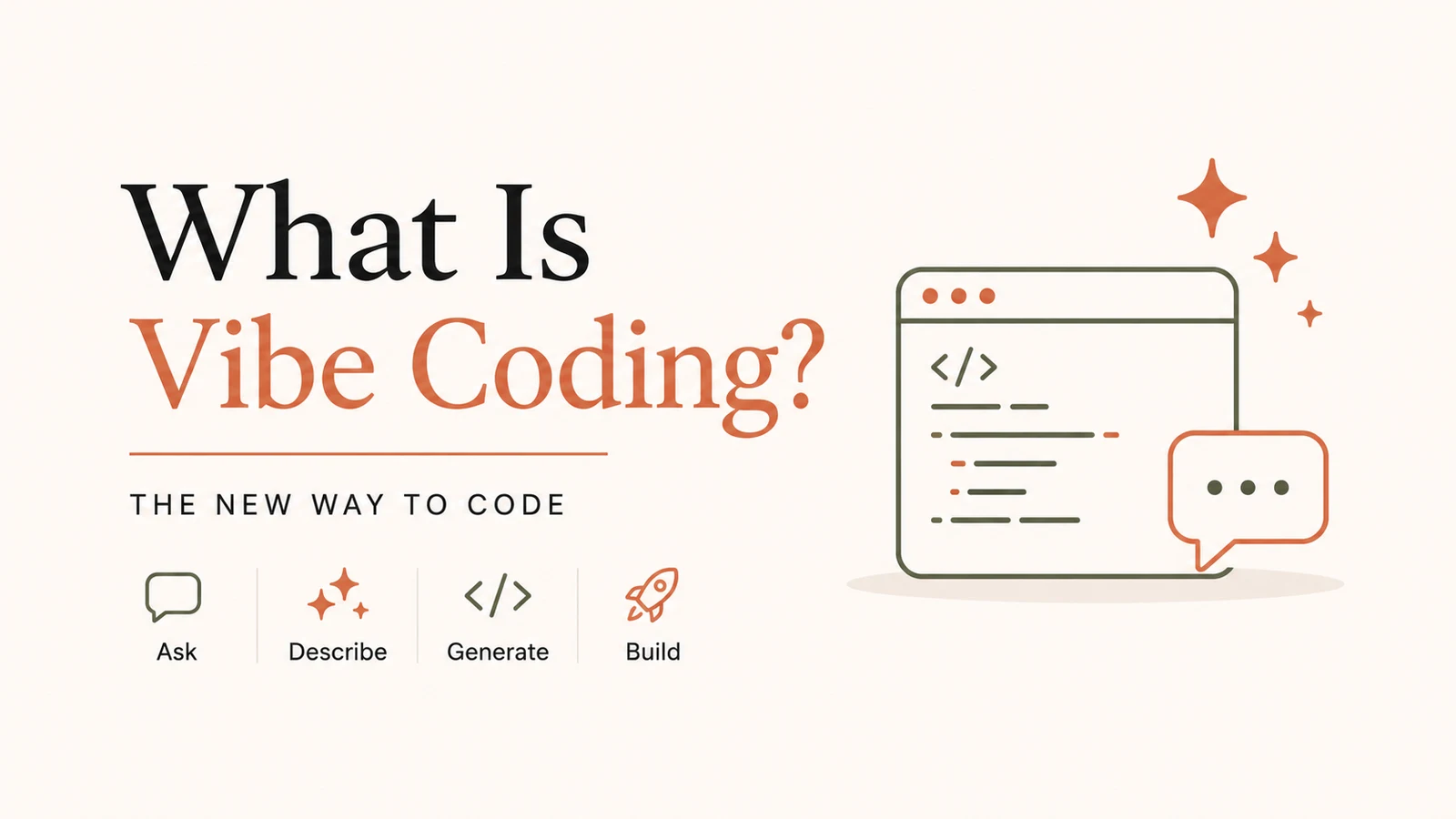
what is vibe coding is an AI‑assisted development method that turns plain‑language prompts into runnable source code, letting developers stay in control through review, testing, and iteration. This answer capsule gives a concise overview before diving deep into origins, workflow, benefits, risks, and practical tips for safe adoption.
Understanding what is vibe coding helps teams decide whether the approach fits their workflow, especially amid the talent crunch that 2026 has intensified.
what is vibe coding? – Origins, terminology, and why it matters
The phrase vibe coding first appeared in February 2025 when computer scientist Andrej Karpathy introduced the concept during a keynote on AI‑driven software creation [Wikipedia]. He described it as “coding where you fully give in to the vibes, embrace exponentials, and forget that the code even exists.” The term quickly gained traction, earning a spot on Collins Dictionary’s 2025 Word of the Year and becoming a staple in developer conversations worldwide [IBM].
Why does what is vibe coding matter today? 2026 saw a dramatic talent shortage: 82 % of businesses reported an inability to hire enough qualified developers, a figure cited by industry surveys QuandaryCG statistics. Vibe coding emerged as a pragmatic response, allowing teams to amplify limited human capacity with AI‑generated code while preserving oversight.
How does vibe coding work? – The agent‑mode workflow explained
By 2026 the technology moved from simple autocomplete to agent mode, where the AI behaves like an autonomous coding assistant. The loop consists of five distinct steps:
- Goal ingestion – You provide a concise, natural‑language prompt (e.g., “Add Stripe checkout to the React app”).
- Planning – The model drafts a multi‑file implementation plan, selecting libraries, architecture patterns, and data models.
- Code generation – It writes code across all relevant files in one pass.
- Self‑testing – The agent runs the code, captures error messages, and automatically patches bugs.
- Iteration – The loop repeats until supplied unit and integration tests pass.
Tools such as Cursor, Windsurf, and GitHub Copilot X embed this loop, letting developers focus on intent rather than syntax [Google blog].
Core principles behind the loop
- Prompt precision – Narrow, testable prompts reduce hallucinations.
- Deterministic temperature – Lower temperature values (e.g., 0.2) produce repeatable code.
- Test‑first mindset – Asking the AI to generate tests before code creates a safety net.
- Human‑in‑the‑loop review – Every diff is inspected before merge.
Benefits of vibe coding
When you ask what is vibe coding, the answer includes speed, consistency, and learning gains:
- Speed – Prototypes that once took weeks can be built in hours.
- Consistency – AI enforces coding standards automatically, reducing stylistic drift.
- Learning aid – Beginners receive instant, annotated examples, shortening the learning curve.
- Resource efficiency – Senior engineers can focus on high‑level design while AI handles routine implementation.
A 2026 industry poll found 92 % of U.S. developers using AI coding assistants daily, underscoring the rapid adoption of vibe coding practices.
Risks and common pitfalls
Despite its advantages, vibe coding introduces new failure modes:
| Risk | Typical impact | Mitigation |
|---|---|---|
| Hidden logic errors | Plausible but incorrect algorithms | Run comprehensive tests; request explanations for each block. |
| Security vulnerabilities | AI‑co‑authored code shows 2.74× higher severe issues | Conduct manual security reviews for authentication, payment, and data‑handling modules. |
| Dependency bloat | Unnecessary libraries inflate bundle size | Review package.json (or equivalent) before merging. |
| Over‑reliance | Teams lose deep understanding of the codebase | Pair AI output with regular code‑walkthrough sessions. |
A December 2025 analysis of 470 open‑source pull requests found AI‑generated contributions contained 1.7× more major issues than human‑written code, including 75 % more misconfigurations.
How to vibe code safely – A step‑by‑step checklist
- Define a narrow prompt – Break the project into discrete, testable features.
- Ask for tests first – Include “generate unit tests” in the prompt; run them immediately.
- Review the diff line‑by‑line – Use the IDE’s version‑control view to spot unexpected changes.
- Request explanations – Ask the AI to comment on each function’s purpose and complexity.
- Run static analysis – Tools like SonarQube or ESLint catch style and security issues early.
- Perform a manual security audit – Focus on input validation, authentication flows, and external API calls.
- Document decisions – Record why the AI chose a particular library or pattern for future reference.
Quick best‑practice list
- Iterate in micro‑steps – One feature per prompt.
- Enforce test‑first development – Tests are the safety net.
- Limit AI scope – Keep the model’s temperature low for deterministic output.
- Maintain a human architecture board – Decide high‑level design before AI writes code.
- Version‑control rigorously – Treat AI‑generated commits as any other contribution.
Real‑world use cases
- Startup MVPs – Founders generate a functional prototype in a weekend, then hand it off to engineers for polishing.
- Legacy modernization – AI rewrites outdated modules while preserving API contracts, cutting migration time by up to 60 %.
- Educational labs – Coding bootcamps let students focus on problem‑solving rather than syntax, improving retention rates.
Getting started: a simple example
Below is a concise walkthrough that demonstrates the full agent‑mode loop for a tiny Flask API.
Prompt: "Create a Flask endpoint /hello that returns JSON {\"msg\": \"Hello, vibe!\"} and include a unit test."
- AI planning – Chooses Python, Flask, and pytest.
- Code generation – Produces
app.pyandtest_app.py. - Self‑testing – Runs
pytest; detects a missing import and patches it. - Iteration – Re‑runs tests until they pass.
After the loop, you review the diff, add a docstring, and commit. This pattern scales from single‑file scripts to multi‑service micro‑architectures.
Community, resources, and tools
- Official documentation – The Wikipedia entry provides a solid historical overview.
- IBM’s deep‑dive – Offers a technical primer on agent‑mode internals.
- Google’s blog post – Highlights real‑world case studies and future directions.
- Reddit discussion – The r/learnprogramming thread surfaces common beginner questions.
To streamline documentation alongside code, you can use our AI Blog Writer to auto‑generate API docs for each new endpoint, saving hours of manual writing.
Future outlook – Beyond 2026
Analysts predict that by 2028 agent mode will integrate directly with cloud CI/CD pipelines, enabling fully autonomous feature delivery. Expect tighter coupling with large‑scale model fine‑tuning, where organizations train bespoke coding agents on proprietary codebases, further reducing hallucination rates and improving domain‑specific accuracy.
Frequently asked questions
what is vibe coding is an AI‑assisted development method where you describe desired functionality in natural language and a large language model generates, tests, and iterates the code while you remain in control.
Andrej Karpathy introduced the term in February 2025 during a keynote on AI‑driven software creation.
Agent mode lets the AI plan across multiple files, run the generated code, read error messages, and automatically debug until tests pass, whereas autocomplete only suggests single‑line snippets.
AI‑generated code can contain more logical errors, security vulnerabilities, and unnecessary dependencies; thorough testing, manual reviews, and incremental prompts mitigate these risks.
It works well for prototypes, MVPs, and boilerplate, but production‑grade features—especially those handling security‑critical data—require rigorous human oversight and testing.
Sources
Share this article
Send it to a teammate or save the link for later.
Related articles
Is the AI Bubble Bursting? Big Tech's $725B Reckoning
Is the AI bubble bursting in 2026? Big Tech is set to spend ~$725B on AI as the Magnificent 7 shed $2.3T — the bull and bear case, no hype, no advice.
Read articleApple Lost a Major EU Antitrust Fight: What It Means
Apple lost a major EU antitrust ruling on July 8, 2026, upholding DMA rules on the iPhone. What's decided, what's still pending, and what changes for you.
Read articleBest AI Browser 2026: Comet vs Dia vs Chrome (Atlas Dies)
The best AI browser in 2026? Comet is free and cross-platform, Chrome adds Gemini, and ChatGPT Atlas shuts down Aug 9 — plus the safety risks.
Read article