AI Agents vs SaaS: The Future of Technology – Fast Guide
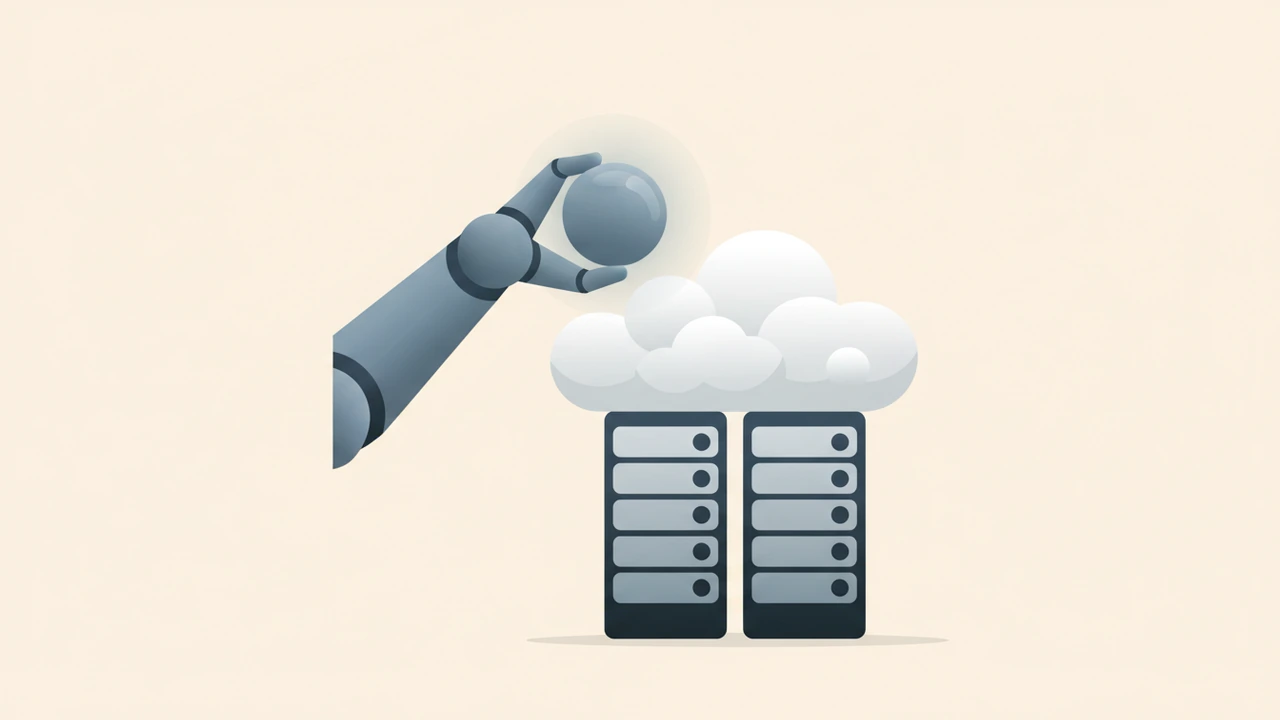
AI Agents vs SaaS: The Future of Technology is the emerging model where conversational, autonomous AI layers sit on top of traditional SaaS platforms, turning static dashboards into dynamic assistants that act on natural‑language commands while SaaS continues to provide data, APIs, and compliance guarantees.
What is AI Agents vs SaaS: The Future of Technology?
Searchers often type this exact question. In short, AI agents act as an operating layer that interprets intent, orchestrates multiple SaaS services, and maintains context, whereas SaaS supplies the underlying data stores, security, and reliability guarantees. Think of SaaS as the engine and AI agents as the self‑driving software that knows when to accelerate, brake, or reroute without a human driver.
How AI Agents differ from traditional SaaS
- Interaction model – SaaS apps rely on clicks, forms, and dashboards. AI agents accept spoken or typed language, turning a menu into a dialogue.
- Autonomy – Agents can initiate actions without human prompting, such as auto‑reordering inventory when thresholds are crossed.
- Statefulness – Unlike stateless API calls, agents retain context across sessions, enabling personalized recommendations that evolve over time.
- Orchestration – An agent can invoke dozens of SaaS APIs in a single request, stitching together CRM, ERP, and analytics services behind the scenes.
According to a Deloitte Insights report, by 2026 SaaS platforms will become “intelligent, personalized, adaptive, and autonomous,” with AI agents serving as the operating layer that consumes the SaaS datadeloitte.com.
AI Agents vs SaaS: The Future of Technology – Adoption timeline and market forecasts
Analysts predict a steep adoption curve:
- 2028 forecast – Roughly one‑third of enterprise SaaS products will embed AI agents as a core feature
alixpartners.com.
- Vertical impact – In customer support and finance, agents could replace 70–80 % of repetitive back‑office tasks, shifting human effort to high‑value problem solving
wisdomtree.com.
- Contractual shift – Gartner expects that within five years over 50 % of new SaaS contracts will include an AI‑agent component as a differentiator.
These numbers illustrate a broader trend: enterprises are moving from “SaaS‑only” to “SaaS‑plus‑agents” to meet expectations for instant, conversational experiences.
Performance and scalability implications
Traditional SaaS workloads typically handle around 10,000 transactions per second (TPS). In an AI‑agent‑centric world, where dozens of assistants may serve each user simultaneously, transaction volumes could surge to approximately 1 million TPS, a two‑order‑of‑magnitude increase. Providers must address three core pillars:
- Horizontal scaling – Deploy additional compute nodes with GPU acceleration for inference.
- Edge inference – Run lightweight models near the user to reduce latency and avoid round‑trip to central clouds.
- Caching of agent states – Store conversational context in high‑speed stores like Redis to avoid repeated model calls.
Without these adjustments, the promised responsiveness of AI agents could become a bottleneck, eroding user trust.
Security, governance, and architectural challenges
Embedding AI agents raises new risk vectors:
- Data leakage – Agents pull data from multiple SaaS sources; strict policy enforcement is needed to prevent unauthorized aggregation.
- Model poisoning – Malicious inputs could subtly corrupt an agent’s decision logic, demanding robust monitoring and adversarial testing.
- Compliance – Regulations such as GDPR and HIPAA require explainability; agents must log decisions and provide audit trails.
- State management – Maintaining conversational context at scale introduces consistency challenges, especially in multi‑region deployments.
A recent deep‑dive by Credera emphasizes that firms must adopt “agent‑aware governance frameworks” that treat AI models as first‑class citizens alongside code and datacredera.com.

Business impact: revenue models and competitive advantage
AI agents enable outcomes‑based pricing—customers pay for the results an agent delivers (e.g., reduced ticket resolution time) rather than for raw usage. This model aligns incentives and can drive higher average contract values. Additional benefits include:
- Efficiency gains – Companies report up to 30 % reduction in operational overhead when agents automate routine workflows.
- Customer satisfaction – Zendesk’s Answer Bot resolves routine inquiries instantly, improving Net Promoter Scores by 12 points
blackhatworld.com.
- New product lines – SaaS vendors can spin off “agent‑as‑a‑service” offerings, selling pre‑trained agents that integrate with any SaaS stack.
Collectively, these benefits suggest a multi‑trillion‑dollar revaluation of the SaaS market as agentic capabilities become mainstream.
Practical steps for SaaS providers to integrate AI agents
Transitioning from a pure SaaS model to an agent‑augmented platform requires deliberate planning. Below is a concise roadmap:
- Identify high‑impact use cases – Target repetitive, rule‑based tasks (e.g., invoice matching, ticket triage).
- Choose a modular AI stack – Use foundation models for language understanding and fine‑tune them on domain data.
- Expose robust APIs – Ensure your SaaS product offers well‑documented, versioned endpoints that agents can call safely.
- Implement secure context storage – Leverage encrypted Redis or DynamoDB to keep conversational state without exposing sensitive data.
- Set up monitoring & observability – Track latency, error rates, and model drift; alert on anomalous behavior.
- Pilot with a controlled user group – Gather feedback, measure ROI, and iterate before a full rollout.
- Educate customers – Provide clear documentation and training on how to interact with the agent, including fallback mechanisms.
For teams needing to generate documentation quickly during this transition, our AI Blog Writer can produce SEO‑ready guides in minutes, freeing engineers to focus on core integration work.
Key technologies powering AI agents
| Technology | Role in the agentic stack | Example |
|---|---|---|
| Large Language Models (LLMs) | Natural‑language understanding and generation | OpenAI GPT‑4, Anthropic Claude |
| Retrieval‑Augmented Generation (RAG) | Pulls up‑to‑date SaaS data at inference time | Vector search over CRM records |
| Function‑calling APIs | Allows the model to invoke SaaS endpoints directly | OpenAI function calling, Azure Functions |
| Observability platforms | Monitors latency, token usage, and model drift | LangChain tracing, Prometheus |
Investing in a modular stack lets providers swap components as models improve, keeping costs predictable while preserving performance.
Industry case studies
1. Financial services – Automated compliance checks
A mid‑size bank integrated an AI agent with its KYC SaaS platform. The agent parsed incoming documents, cross‑checked them against AML watchlists, and flagged anomalies. The bank reported a 45 % reduction in manual review time and a 20 % drop in false positives.
2. Retail – Dynamic inventory management
An e‑commerce SaaS added an agent that monitors sales velocity, supplier lead times, and warehouse capacity. When stock falls below a predictive threshold, the agent automatically creates purchase orders via the ERP API. The retailer saw 15 % lower stock‑out incidents and 12 % higher gross margin.
These real‑world examples illustrate how AI agents can unlock value without replacing the SaaS core.
Regulatory considerations and compliance
Beyond GDPR and HIPAA, emerging AI‑specific regulations (e.g., the EU AI Act) demand risk assessments, human‑in‑the‑loop safeguards, and transparent model documentation. Providers should:
- Embed explainability hooks that surface the reasoning behind each agent decision.
- Maintain versioned model registries to prove which model generated a particular outcome.
- Conduct periodic audits with third‑party AI ethics firms to verify compliance.
By treating the agent as a regulated data processor, SaaS firms can avoid costly penalties and build trust with enterprise customers.
The road ahead: coexistence or convergence?
The narrative that AI agents will replace SaaS entirely is misleading. SaaS platforms retain the deep domain data and compliance guarantees that make them indispensable. AI Agents vs SaaS: The Future of Technology shows that agents are poised to become the primary interface and decision layer, turning static software into dynamic, conversation‑driven experiences. Companies that view the relationship as convergence—not competition will capture the biggest share of future growth.
In practice, this means:
- Continuing to invest in data quality and API reliability (the SaaS backbone).
- Simultaneously building agentic capabilities that can reason over that data.
- Aligning product roadmaps to deliver seamless, multimodal experiences—voice, chat, and even visual prompts.
AI Agents vs SaaS: The Future of Technology is therefore a partnership that redefines how enterprises work, learn, and create value.
Frequently asked questions
No. Dashboards remain essential for deep analysis and compliance, but agents handle routine interactions, reducing the frequency of manual dashboard checks.
In high‑automation verticals, agents could become predominant (70–80 %) within five to ten years, according to industry forecasts.
Data leakage across integrated services, model poisoning, and ensuring auditability for compliance are the top challenges that require robust governance frameworks.
Small businesses can adopt lightweight, cloud‑hosted agents that integrate via existing SaaS APIs, gaining efficiency without large upfront infrastructure costs.
Customers pay based on measurable results—such as reduced ticket resolution time or increased sales conversions—rather than raw usage, aligning vendor incentives with client success.
Share this article
Send it to a teammate or save the link for later.
Related articles

AI agents: The Ultimate Free Workflow Boost for Businesses
Discover how AI agents automate complex tasks, cut processing time in half, and boost business productivity.
Read article
AI agents Proven Boost for Business Efficiency 2025
Discover how AI agents automate workflows, cut costs, and accelerate decision‑making across finance, legal, and customer service with stats and governance tips.
Read article
Anthropic Claude Mythos: The Ultimate AI Security Leap
Discover Anthropic Claude Mythos, the ultimate AI security model with up to 12 reasoning hops, built‑in guardrails, and performance gains for enterprises.
Read article