Cybersecurity Tools: The Best 2026 Defense Guide Now
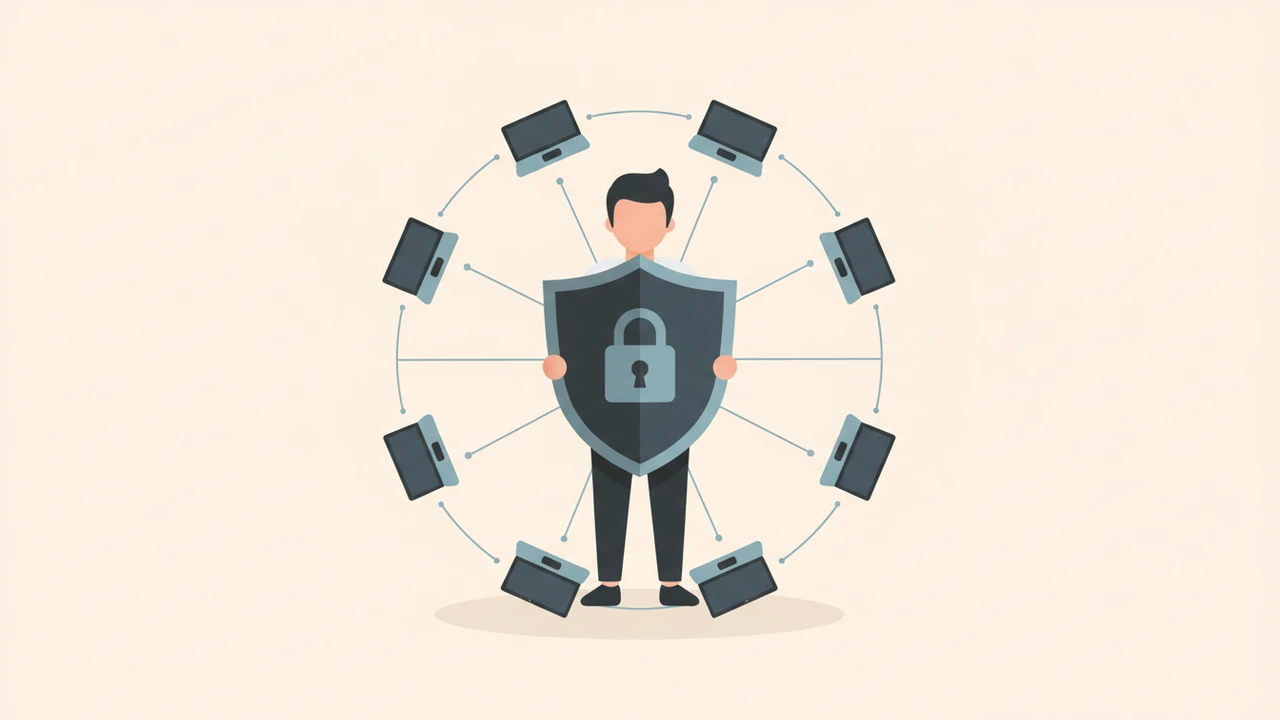
Cybersecurity tools are the backbone of any modern defense strategy, helping organizations detect, prevent, and respond to threats before they cause damage. This guide walks you through essential categories, free utilities, vendor‑selection tips, and best‑practice checklists for 2026.
Why cybersecurity tools matter more than ever
The threat landscape is accelerating. A SentinelOne survey reported that 73 % of board members now list cybersecurity as a top business priority【SentinelOne 2026 Survey】, while Sprinto found 84 % of organizations plan to expand their security toolsets in 2026【Sprinto 2026 Outlook】. These figures illustrate why a layered defense—powered by the right cybersecurity tools—is no longer optional.
Which cybersecurity tools should small businesses prioritize in 2026?
Small and medium‑size enterprises (SMBs) need affordable, easy‑to‑manage solutions that still deliver enterprise‑grade protection. The core stack can be broken into seven categories:
- Endpoint Protection Platforms (EPP) – Real‑time malware, ransomware, and file‑less attack detection on laptops, desktops, and mobile devices.
- Password Managers – Secure generation, storage, and autofill of credentials, eliminating password reuse.
- Virtual Private Networks (VPN) – End‑to‑end encryption for remote workers and public‑Wi‑Fi connections.
- Network Firewalls & Intrusion Prevention Systems (IPS) – Traffic filtering and malicious‑payload blocking before threats reach endpoints.
- Email & Web Filtering – Scanning inbound messages and web requests for phishing links, malicious attachments, and compromised domains.
- Vulnerability Scanners – Continuous probing of servers, containers, and cloud assets for known weaknesses and missing patches.
- Backup & Disaster‑Recovery Solutions – Immutable copies of critical data to enable rapid recovery after ransomware encryption.
These categories are consistently highlighted by both SentinelOne and Sprinto as the most impactful for 2026 deployments.
How the core categories work together
A “defense‑in‑depth” model layers controls so that a breach in one tier is stopped by another. The table below shows the typical flow:
| Layer | Primary Function | Example Tools |
|---|---|---|
| Identity | Secure credential creation & verification | Password managers, MFA solutions |
| Endpoint | Block malicious code at the device level | EPP suites (e.g., CrowdStrike, SentinelOne) |
| Network | Filter traffic, detect intrusions | Next‑gen firewalls, IPS |
| Email/Web | Stop phishing and malicious downloads | Mimecast, Proofpoint |
| Data | Encrypt, backup, and restore information | BitLocker, Veeam, Cloud backup services |
| Vulnerability Management | Identify and remediate weaknesses | Nessus, Qualys, OpenVAS |
By integrating tools across these layers, organizations dramatically reduce the probability that a single breach will cascade into a full‑scale incident.
Free utilities that complement paid solutions
Budget constraints shouldn’t stop SMBs from practicing good hygiene. RunFreeTools offers several no‑cost web utilities that fit neatly into a broader security program:
- Password Generator – Creates strong, random passwords that meet NIST guidelines.
- Image to Text (OCR) – Extracts text from screenshots of configuration files for quick review.
- PDF to Text – Converts policy documents into searchable formats for easy auditing.
While free tools lack the advanced analytics of enterprise platforms, they handle routine tasks that free up staff for higher‑value activities.
Best‑practice checklist for maximizing tool effectiveness
- Standardize strong password policies – Enforce length, complexity, and rotation rules; store passwords only in encrypted vaults.
- Enable Multi‑Factor Authentication (MFA) – Add a second verification step for all privileged accounts.
- Keep software updated – Apply patches within the vendor’s recommended window; automate where possible.
- Conduct regular penetration tests – Validate that controls work against real‑world attack techniques.
- Back up critical data frequently – Follow the 3‑2‑1 rule (three copies, two media types, one off‑site).
- Educate employees – Run phishing simulations and short security awareness modules quarterly.
- Monitor alerts centrally – Deploy a Security Information and Event Management (SIEM) platform to correlate logs and trigger rapid response.
Following this checklist ensures each cybersecurity tool operates at peak efficiency and that gaps are identified before attackers can exploit them.
Choosing the right vendors
When evaluating vendors, consider the following criteria:
- Performance benchmarks – Independent lab results (e.g., AV‑TEST, NSS Labs).
- Scalability – Ability to grow with your organization’s user base.
- Integration capability – Compatibility with existing SIEM, ticketing, and identity solutions.
- Support & documentation – Responsive technical assistance and clear deployment guides.
- Total Cost of Ownership – Licensing, maintenance, and hidden operational costs.
For a deeper dive, see the comprehensive lists from SentinelOne and Sprinto, which rank tools based on effectiveness, ease of use, and price【SentinelOne Tool List】【Sprinto Tool List】.
Emerging trends in cybersecurity tools for 2026
- AI‑driven threat hunting – Machine‑learning models that prioritize alerts based on attack probability, reducing analyst fatigue.
- Zero‑Trust Network Access (ZTNA) – Replaces traditional VPNs with identity‑centric, micro‑segmented connections.
- Extended Detection and Response (XDR) – Consolidates endpoint, network, and cloud telemetry into a single console for faster investigation.
- Privacy‑preserving analytics – Homomorphic encryption allows security teams to query encrypted data without exposing raw records.
Adopting at least one of these emerging capabilities can give your organization a competitive edge against sophisticated adversaries.
Compliance considerations
Regulatory frameworks such as GDPR, HIPAA, and PCI‑DSS require documented controls, audit trails, and encryption at rest and in transit. The following cybersecurity tools directly support compliance:
- Data encryption suites – Ensure all stored files and communications are encrypted (e.g., BitLocker, TLS 1.3).
- Audit‑ready SIEMs – Retain logs for the mandated retention period and provide searchable reports.
- Policy‑driven firewalls – Enforce network segmentation required by PCI‑DSS.
A recent Fortinet study notes that 68 % of SMBs achieve compliance faster when they pair a unified vulnerability scanner with automated patch management【Fortinet SMB Study】.
Case study: Small business implementation
Company: GreenLeaf Marketing, a 25‑employee digital agency.
Challenge: Limited IT staff and rising ransomware attempts.
Solution:
| Tool Category | Selected Product | Implementation Highlights |
|---|---|---|
| Endpoint Protection | SentinelOne EPP | Agent deployed via centralized script; auto‑quarantine of malicious files. |
| Password Management | Bitwarden (free tier) | Enforced master‑password policy; integrated with browser autofill. |
| VPN | OpenVPN Cloud | Zero‑trust access for remote designers. |
| Email Filtering | Mimecast Essentials | Phishing detection reduced click‑through rate by 42 %. |
| Backup | Veeam Cloud Connect | Daily immutable snapshots; 3‑2‑1 storage achieved. |
Result: Within six months, ransomware incidents dropped to zero, and the firm passed its ISO 27001 audit on the first attempt.
Putting it all together
- Map your risk profile – Identify the data, assets, and regulatory requirements that matter most.
- Select one tool per core category – Prioritize solutions that integrate smoothly.
- Deploy with a phased rollout – Start with endpoint protection, then add network and email controls.
- Measure effectiveness – Use KPIs such as mean time to detect (MTTD) and mean time to respond (MTTR).
- Iterate – Review logs monthly, adjust policies, and incorporate emerging AI‑driven features as they mature.
By following this systematic approach, you can build a resilient security posture that scales with your organization and adapts to the evolving threat landscape of 2026 and beyond.
Frequently asked questions
Endpoint protection combined with a reputable password manager offers the greatest immediate impact, as it secures devices and eliminates weak credentials that attackers commonly exploit.
Apply critical patches within 48 hours of release and schedule routine updates at least monthly; automated patch management can help maintain consistency.
Free tools are useful for basic hygiene, but most regulatory frameworks (e.g., GDPR, HIPAA) require documented controls and audit trails that typically come from paid solutions.
Human awareness is the last line of defense; regular phishing simulations and concise security briefings dramatically reduce the success rate of social‑engineering attacks.
AI‑driven threat hunting and Zero‑Trust Network Access (ZTNA) are the fastest‑growing capabilities and provide measurable reductions in alert fatigue and lateral movement risk.
Sources
Share this article
Send it to a teammate or save the link for later.
More from RunFreeTools Team
Free Password Generator: Create Strong, Unique Passwords
Our free password generator creates strong, unique passwords instantly, keeping your online accounts safe. Learn security best practices and key statistics.
Read article
Cybersecurity Essentials for Small Firms: The Ultimate Guide
Explore the ultimate cybersecurity roadmap for small firms—strong passwords, MFA, employee training, backups, and affordable tools to safeguard your business.
Read article
Free Strong Password Generator – Secure Login Tool
Create uncrackable passwords with our free strong password generator. Customize length, symbols, numbers, protect your accounts from the 81% breach risk.
Read article