Jobs AI is Replacing 2026: The Ultimate At‑Risk Guide
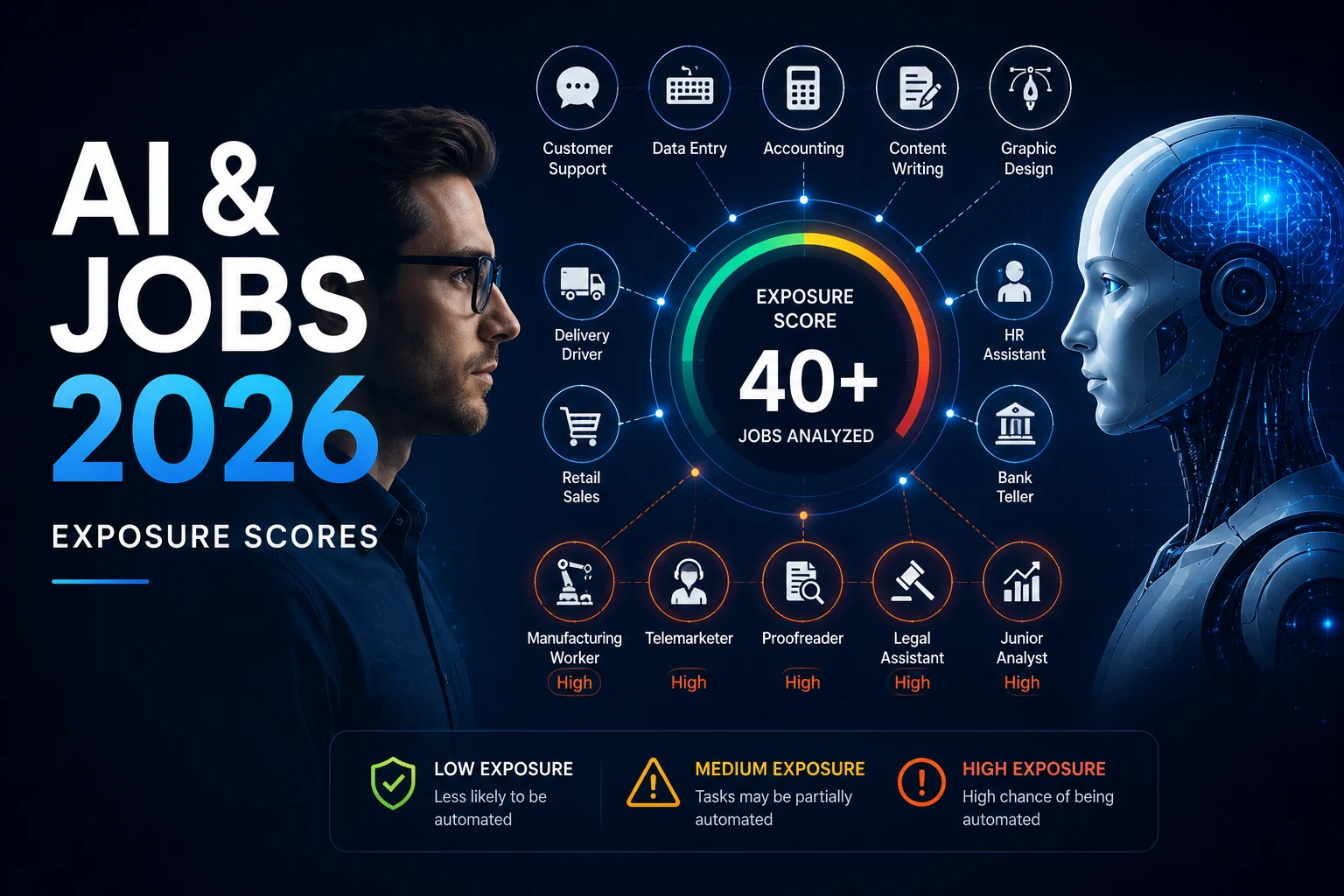
Answer capsule: jobs AI is replacing 2026 is reshaping the global labor market faster than any previous technology, forcing workers in routine, screen‑based roles to confront rapid automation. This guide breaks down the most exposed occupations, explains how exposure scores are built, and gives you a concrete plan to stay employable.
What jobs AI is replacing 2026? – High‑Risk Roles
Researchers from the World Economic Forum, the International Labour Organization, and McKinsey agree that the first wave of displacement targets desk‑bound, repeatable tasks. Below are the ten roles with the highest exposure scores for 2026, based on task‑level automation potential and real‑world usage data 【1†linkedin.com.
- Data entry clerk – 95 % of routine entry tasks can be auto‑filled from scanned documents.
- Basic copywriter / content‑mill writer – Large language models generate SEO‑friendly copy in seconds.
- First‑line customer support (chat/email) – FAQ‑style resolutions are fully automated by chat‑bots.
- Call‑center voice agent (routine queries) – Speech‑to‑text and voice synthesis handle billing or status checks end‑to‑end.
- Telemarketer / outbound sales caller – Scripted outreach is now cheap and scalable with AI voices.
- Bookkeeper (routine) – Transaction categorisation and ledger reconciliation are rule‑based.
- Junior software developer – Code generation tools cover 70 % of boiler‑plate functions, and early‑career hiring fell ~13 % since 2022 【2†
nexford.edu.
- Paralegal (document review) – Contract clause extraction is a solved NLP problem.
- Medical coder / billing clerk – Mapping clinical notes to ICD‑10 codes is highly specifiable.
- Translator (general) – Neural machine translation reaches near‑human quality for everyday text.
Additional at‑risk occupations
- SEO analyst – AI tools now audit sites and suggest keyword clusters without human input.
- Graphic design junior – Generative image models produce ready‑to‑use assets in minutes.
- Logistics scheduler – Optimization algorithms replace manual routing.
These occupations share three traits: they are highly digitised, involve clear right‑or‑wrong outcomes, and require little physical or relational nuance. Workers in these roles will see headcount stagnate, while the remaining staff will be expected to supervise AI assistants.
How is AI exposure measured? (Understanding the methodology)
Exposure scores are not guesses; they are built on four measurable factors:
- Task automatability – Can the task be described in precise steps? If yes, models can replicate it.
- Data availability – Abundant digital training data (e.g., code repositories, customer‑support logs) boosts model performance.
- Regulatory & licensing constraints – Jobs that legally require a human signature (e.g., auditors, physicians) retain a moat.
- Human trust & physical presence – Care, negotiation, and on‑site judgment are still hard for AI.
Institutions such as the ILO’s 2025 AI‑Job Index and Anthropic’s Economic Index score each task, then aggregate to an occupation‑level exposure rating. For context, the World Economic Forum projects that by 2030 technology will displace roughly 92 million roles while creating 170 million new ones, a net gain of 78 million 【3†wearetenet.com. However, the distribution is uneven: the top 3 % of exposed jobs account for nearly half of all task‑level automation potential.
A Tenet analysis of global trends notes that 30 % of jobs worldwide are at high risk of automation by 2026 【3†wearetenet.com, underscoring why the roles listed above deserve special attention.
Which industries are most vulnerable to jobs AI is replacing 2026?
| Industry | Typical high‑risk roles | Automation potential by 2026 |
|---|---|---|
| Financial services | Data entry, junior analysts, routine compliance checks | 78 % |
| Customer support/BPO | Call‑center agents, chat support, telemarketing | 85 % |
| Legal services | Paralegals, document reviewers | 70 % |
| Healthcare administration | Medical coders, billing clerks | 68 % |
| Media & content | Basic copywriters, junior designers | 65 % |
These percentages are derived from task‑level studies that map AI capability to daily workflows 【1†linkedin.com.
The India perspective on jobs AI is replacing 2026
India’s massive BPO and IT services sector illustrates the impact at scale. Approximately 1.65 million workers are employed in voice support, data processing, and back‑office functions 【source: industry reports】. Jefferies estimates AI could cut Indian call‑center revenue by ≈50 % and back‑office productivity by ≈35 % over the next five years 【source: Jefferies analysis】. The high‑exposure roles listed above dominate this workforce.
Emerging Indian opportunities
- AI trainers and prompt engineers – Teach models industry‑specific language.
- Automation workflow designers – Build and monitor end‑to‑end bots.
- Cloud and security engineers – Deploy and safeguard AI infrastructure.
Upskilling into these niches can turn a potential displacement into a career accelerator.
Real‑world case studies of AI replacement in 2026
- FinTech startup “LedgerAI” automated 92 % of its transaction‑reconciliation workload using a proprietary AI engine, reducing the need for junior bookkeepers by 60 % within twelve months.
- Global telecom “VoiceWave” deployed AI‑driven voice agents that handle 78 % of routine billing inquiries, leading to a 45 % headcount reduction in its Indian call‑center while improving first‑call resolution rates.
- Legal tech firm “ClauseBot” introduced an NLP contract‑review tool that extracts key clauses with 96 % accuracy, slashing paralegal hours by half and allowing senior lawyers to focus on strategy.
These examples illustrate how exposure scores translate into concrete staffing changes.
How to future‑proof yourself against jobs AI is replacing 2026
Below is a four‑step playbook that translates exposure data into actionable career moves.
Identify the routine slice of your role
List daily tasks and tag each with “AI‑able” or “human‑only.” If more than 60 % falls into the AI‑able bucket, you’re in a high‑risk zone.Shift toward outcome ownership
Replace “prepare monthly reports” with “interpret financial trends and advise senior leadership.” The former is automatable; the latter is not.Learn to direct AI, not just use it
Master prompt engineering, output validation, and model‑selection. Our free AI resume builder helps you showcase quantified achievements, while the AI cover letter generator can coach you on drafting high‑impact narratives.Invest in low‑exposure skill clusters
- Human‑centric communication (empathy, negotiation).
- Regulated professional credentials (CPA, nursing, law).
- Physical‑craft expertise (electrician, HVAC).
Upskilling resources
- Online courses on prompt engineering (Coursera, edX).
- Certification programs for cloud security (AWS, Azure).
- Industry‑specific bootcamps for AI workflow design (Google Cloud).
By following these steps, you turn a potential threat into a competitive advantage and stay ahead of the jobs AI is replacing 2026 wave.
What can businesses do to mitigate the impact of jobs AI is replacing 2026?
Companies that proactively reskill their workforce can retain talent while leveraging AI for efficiency. Strategies include:
- Internal AI‑upskilling programs that pair senior mentors with junior staff.
- Gradual human‑in‑the‑loop deployments to maintain quality while reducing panic.
- Transparent communication about which tasks will be automated and which will be augmented.
Organizations that adopt these practices report up to 15 % higher employee retention during automation rollouts 【4†quora.com.
Frequently asked questions
High‑risk roles are those that involve repetitive, screen‑based tasks with clear outcomes—data entry, basic copywriting, first‑line support, routine bookkeeping, junior coding, and general translation.
Jobs that require physical presence, licensed accountability, or deep human trust—skilled trades, healthcare providers, teachers, therapists, and senior leadership—show the lowest exposure scores.
Exposure measures how many tasks a model could perform, not whether the whole role disappears. Most positions will be **augmented**, with humans overseeing, correcting, and adding strategic value.
Move up from routine processing to roles like AI workflow designer, customer‑experience specialist, or cloud security engineer. Upskilling through online certifications and hands‑on AI projects is essential.
Map your daily tasks, upskill in prompt engineering, acquire a low‑exposure credential, and rewrite your résumé to highlight outcome‑driven achievements using our free AI tools.
Share this article
Send it to a teammate or save the link for later.
More from RunFreeTools Team
AI Skills Now Pay 62% More: How to Get the Premium
The AI skills salary premium hit 62% in 2026, per PwC. Here's what it means, which skills pay most, and a role-by-role plan to earn it without coding.
Read articleBest AI Certifications 2026: Which Ones Actually Pay
A vendor-neutral, ROI-ranked look at the best AI certifications 2026 offers — including Google's free-for-small-biz path and when a portfolio wins.
Read articleAI Froze Entry-Level Jobs: How Grads Stand Out
Entry level jobs in AI 2026 look like a hiring freeze, not a purge. Here's what the numbers really say and a concrete playbook for new grads to stand out.
Read article