China AI Data Centers: The Ultimate Massive $295B AI Bet
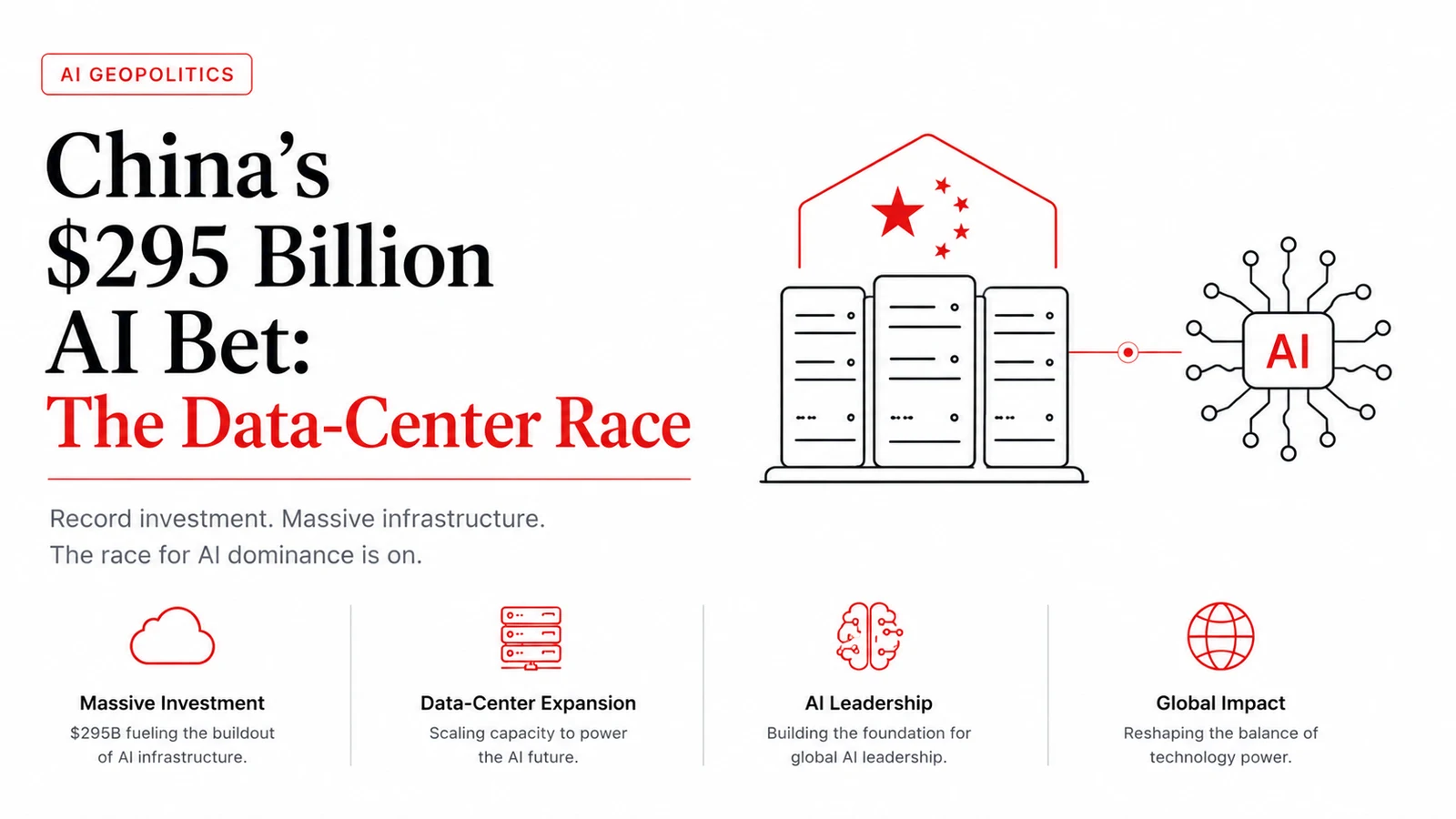

Quick answer: China AI data centers are set to form a $295 billion national grid by 2028, with at least 80 % of the hardware sourced from domestic chip makers, a move that underpins DeepSeek’s $7.4 billion funding round.
China AI data centers: Government plan and timeline
Beijing’s draft blueprint envisions stitching together more than a hundred scattered AI facilities into a single, high‑speed network. The plan calls for 2 trillion yuan (about $295 billion) in public construction over the next five years, plus additional spending on power‑grid upgrades that could push total investment past 5 trillion yuan.
Key points:
- State‑run operators – China Mobile and China Telecom will run the bulk of the sites.
- Domestic‑first hardware – At least 80 % of AI accelerators must come from Chinese suppliers such as Huawei’s Ascend line.
- National grid by 2028 – The goal is a coordinated compute backbone that links coastal demand hubs with inland, power‑cheap clusters.
The strategy mirrors the “Eastern Data, Western Computing” initiative launched in 2022, which already routes heavy workloads to western provinces for cheaper land and cooling.
“The 105 EFLOPS goal reflects the PRC’s target of dedicating 35 % of its planned 300 EFLOPS compute capacity to AI by 2025” 【Strider Technologies, 2025】.
What are the main challenges facing China AI data centers?
Even with massive financing, several hurdles could slow progress:
- Chip supply constraints – Domestic HBM production lags behind demand, limiting how many Ascend accelerators can be assembled. Analysts estimate Chinese suppliers will meet only ~76 % of AI‑chip demand by 2030, short of the 80 % target.
- Under‑utilized facilities – A recent MIT Technology Review investigation found that many newly built AI data centers sit idle, raising concerns about over‑building and resource waste 【MIT Technology Review, 2025】.
- Power and cooling – Scaling to exa‑scale workloads requires massive upgrades to the electricity grid and innovative cooling solutions, especially in western sites.
- Talent bottleneck – Skilled engineers capable of designing, operating, and optimizing AI‑specific hardware remain scarce.
Quick bullet recap
- Funding: 2 trillion yuan public, plus sovereign bonds and private loans.
- Domestic chip goal: ≥80 % of accelerators from Chinese vendors.
- Timeline: Full national grid operational by 2028.
- Risk factors: Chip shortages, idle capacity, power‑grid upgrades.
DeepSeek’s $7.4 billion raise fuels the grid
The timing of the national plan aligns with DeepSeek’s massive financing round. The Hangzhou‑based lab, behind the V3 and R1 models, aims to use the new compute capacity to train larger, more capable agents. Founder Liang Wenfeng is contributing roughly 40 % of the capital himself, while Tencent, CATL, and other strategic investors are lining up commitments.
The funding will be directed largely toward expanding compute clusters—precisely the type of infrastructure the China AI data centers plan is building. For content creators looking to explain these developments, our AI Blog Writer can help craft clear, SEO‑friendly posts in minutes.
The broader AI infrastructure race
China’s $295 billion commitment sits beside a $70 billion investment pipeline projected for Chinese AI providers, according to Goldman Sachs 【Goldman Sachs, 2025】. While the United States’ hyperscalers collectively pour over $725 billion into AI compute this year, Beijing’s approach is centrally coordinated, debt‑financed, and heavily reliant on homegrown silicon.
| Metric | China AI data centers | U.S. AI build‑out |
|---|---|---|
| Total spend (2026‑2031) | $295 B (public) | $725 B (private) |
| Chip source | ≥80 % domestic | Nvidia, AMD, custom |
| Operators | State telecoms | Cloud giants |
| Planning | National grid by 2028 | Market‑driven |
Bottom line
If the draft survives, China AI data centers will become a state‑engineered compute backbone that could reshape the global AI landscape. The financial commitment is solid, but the real test lies in delivering enough advanced chips, high‑bandwidth memory, and power infrastructure to meet the 80 % domestic target. Success would give Beijing a powerful, self‑reliant AI platform; failure could leave a costly network of under‑used facilities.
By Li Wei, Senior Tech Analyst at RunFreeTools
Frequently asked questions
The draft outlines roughly **2 trillion yuan** (about $295 billion) in public construction over five years, with additional spending on power‑grid upgrades that could raise total outlays above **5 trillion yuan**.
The goal is to reduce reliance on foreign suppliers like Nvidia and AMD, fostering a self‑sufficient AI ecosystem and supporting China’s broader “Made in China 2025” technology ambitions.
Yes. A MIT Technology Review report noted that many newly built AI data centers are under‑utilized, highlighting the risk of over‑building amid supply chain constraints 【MIT Technology Review, 2025】.
DeepSeek’s $7.4 billion raise is earmarked for expanding compute capacity, directly leveraging the infrastructure that the *China AI data centers* initiative will provide.
The blueprint targets full integration of the fragmented facilities into a cohesive grid by **2028**.
Sources
Share this article
Send it to a teammate or save the link for later.
More from RunFreeTools Team

Essential AI Unicorns Reshaping Tech Landscape in 2024
Explore the top AI unicorns of 2024, their funding, sector impact, and geographic trends—data‑driven insights for investors and tech professionals.
Read article
Hidden AI Startups: Best Investor Watchlist 2026 Insights
Discover hidden AI startups investors are tracking in 2026, their funding, growth metrics, and how founders can attract capital using privacy‑first tools.
Read articleIs the AI Bubble Bursting? Big Tech's $725B Reckoning
Is the AI bubble bursting in 2026? Big Tech is set to spend ~$725B on AI as the Magnificent 7 shed $2.3T — the bull and bear case, no hype, no advice.
Read article