OpenAI Hires Dean Ball: The Ultimate Strategic Shift Ahead

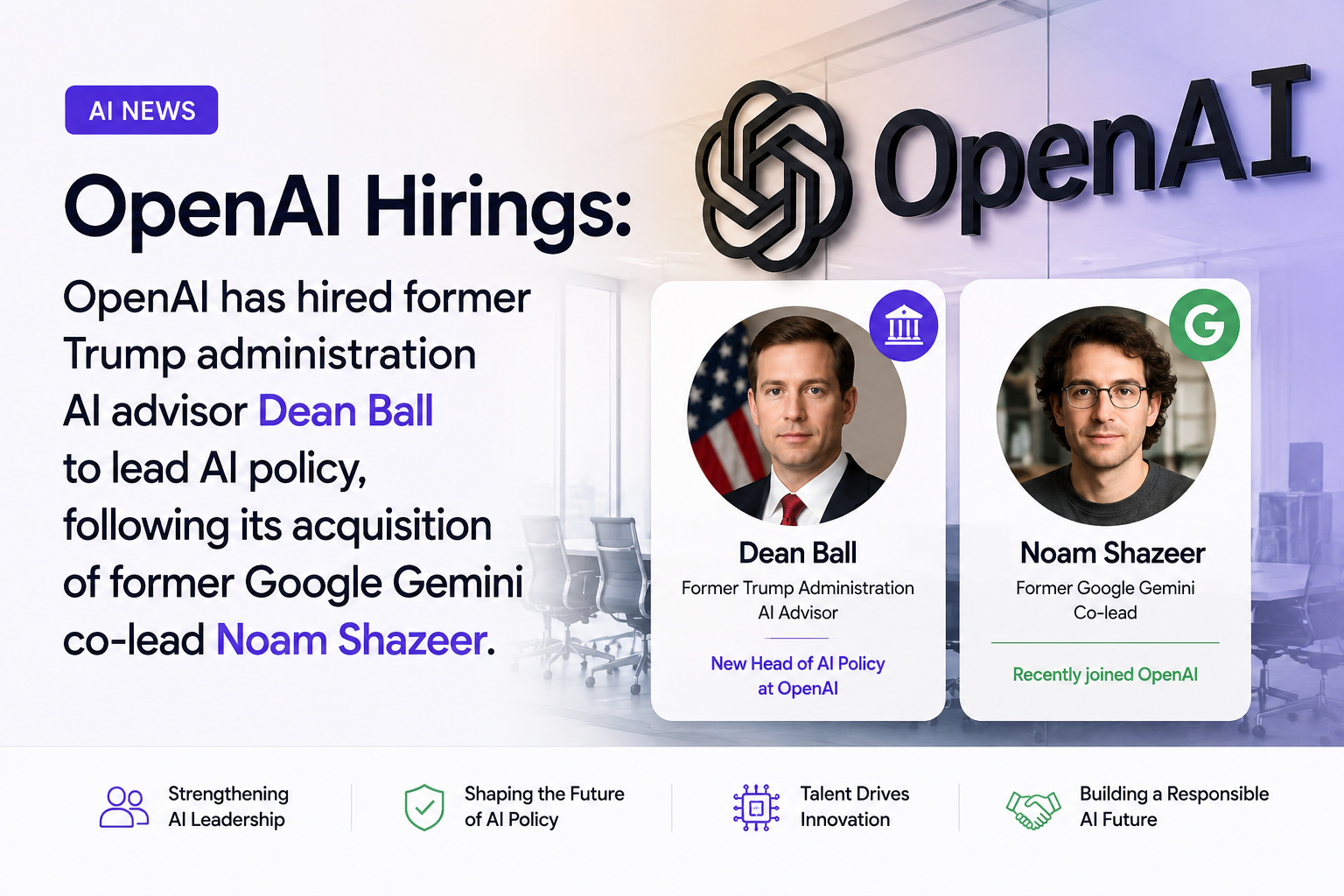
OpenAI hires Dean Ball to head a brand‑new Strategic Futures team that fuses frontier AI policy, internal governance, and long‑term risk management. The appointment arrives as OpenAI readies its IPO, giving investors a clear signal that regulatory risk is being tackled from the inside out.
openai hires dean ball: Why This Move Matters
Hiring openai hires dean ball brings a former White House adviser into the heart of OpenAI’s strategy. Ball helped craft the 2025 America’s AI Action Plan while serving as a senior AI policy adviser in the Trump administration. His insider knowledge of the Office of Science and Technology Policy, the National Security Council, and the White House Office of Management and Budget equips OpenAI to anticipate policy shifts before they become formal regulations.
“OpenAI hires Dean Ball to translate the company’s technical roadmap into language that policymakers can act on,” notes the The Next Web report.
How does openai hires dean ball affect AI policy?
Ball’s government background gives OpenAI direct access to the policy‑making process. The White House’s official AI hub notes that “inter‑agency coordination is essential for responsible AI development”whitehouse.gov, a principle Ball will embed in OpenAI’s internal playbook. Moreover, a 2023 Stanford AI Index report found that AI research publications grew 23 % year‑over‑year, underscoring the rapid pace of innovation that policy must keep up with.
What impact does openai hires dean ball have on OpenAI’s IPO?
Investors are looking for signals that OpenAI can manage the regulatory risk that typically drags down valuations of AI‑centric public companies. Ball’s presence addresses two investor concerns:
- Predictable regulatory environment – A former insider can map out likely policy trajectories, reducing surprise regulatory costs.
- Governance credibility – Demonstrating proactive internal controls can lower the perceived need for heavy external oversight.
Just days after OpenAI filed its S‑1, the company drew an investigation by 42 state attorneys generalthenextweb.com, underscoring the heightened scrutiny it faces. A 2024 NIST AI survey reported that 68 % of AI firms view clear regulation as critical to market confidence, highlighting why Ball’s policy expertise is a strategic asset.
The Strategic Futures Team’s Mandate
Ball reports directly to chief strategy officer Jason Kwon and oversees four core pillars:
- Frontier AI policy – Shaping U.S. and international frameworks for high‑risk models.
- Internal governance – Designing OpenAI’s own safety, red‑team, and model‑release protocols.
- Long‑term risk – Evaluating existential threats and aligning research with societal values.
- Lab‑government relations – Managing day‑to‑day interactions with regulators and legislators.
By integrating policy and governance under one senior leader, OpenAI is treating regulatory risk as a product feature rather than a compliance afterthought.
Noam Shazeer Joins the Technical Front
While Ball tackles the policy side, OpenAI simultaneously secured Noam Shazeer, co‑author of the seminal “Attention Is All You Need” paper that introduced the transformer architecture. Shazeer’s career includes a $2.7 billion deal that brought his startup Character.AI back into Google’s fold in 2024, a clear indicator of his market valuethenextweb.com.
What Shazeer Is Expected to Deliver
- Next‑generation model architectures – Exploring alternatives to classic transformers, such as state‑space models or mixture‑of‑experts designs.
- Inference efficiency – Applying his expertise in large‑scale serving to reduce latency and compute costs for OpenAI’s API products.
- Agentic and long‑context systems – Leveraging insights from Character.AI to enhance sustained, personalized interactions.
Together, Ball and Shazeer form a “policy‑research” tandem that mirrors a classic tech playbook: dominate the technical frontier while shaping the rules that govern it.
TL;DR
- OpenAI hires Dean Ball (July 6 2026) to lead a Strategic Futures team covering AI policy, governance, risk, and government relations.
- OpenAI hires Noam Shazeer to boost model architecture and inference efficiency, bringing transformer expertise directly into the lab.
- Both hires are timed with OpenAI’s pre‑IPO push, signaling seriousness about regulatory risk and technical leadership.
How These Moves Fit Into OpenAI’s Broader Strategy
1. Institutional Maturity
Creating a dedicated Strategic Futures group and adding a research heavyweight signals that OpenAI is evolving from a startup mindset to a mature, publicly accountable organization.
2. Talent Signaling
OpenAI’s ability to attract Ball and Shazeer demonstrates its pull in both policy circles and elite research talent pools. This can encourage further senior hires across finance, compliance, and product management.
3. Market Perception
Investors often view senior hires as proxies for future performance. A former White House adviser and a transformer pioneer together suggest that OpenAI is preparing to meet both regulatory and technical milestones required for a successful IPO.
Potential Risks and Mitigations
| Risk | Description | Mitigation |
|---|---|---|
| Political backlash | Ball’s Trump‑administration background may raise concerns among Democratic lawmakers and international regulators. | Transparent communication of policy goals and independent safety audits. |
| Research integration | Shazeer’s academic style may clash with product‑delivery timelines. | Clear charter granting research autonomy while aligning milestones with product roadmaps. |
| Revolving‑door perception | Critics may view Ball’s move as a classic “revolving‑door” case, eroding trust. | Publish conflict‑of‑interest disclosures and maintain a public policy blog. |
What to Watch Next
- Policy output – New white papers or testimony from Ball that echo or extend the America’s AI Action Plan.
- Technical announcements – Papers or model releases that cite Shazeer’s involvement, especially around efficiency or novel architectures.
- IPO filings – How OpenAI’s S‑1 references its governance and talent strategy.
- Further hires – Expansion of the Strategic Futures team or additional senior research appointments.
Using OpenAI’s New Talent to Your Advantage
If you’re crafting AI‑focused resumes or cover letters, consider highlighting experience that aligns with OpenAI’s emerging priorities—policy awareness, safety expertise, or advanced model engineering. Our AI Resume Builder can help you showcase those skills effectively.
Key Takeaways
- openai hires dean ball to embed policy expertise directly into its core strategy, reducing regulatory uncertainty ahead of an IPO.
- Dean Ball’s background provides insider knowledge of U.S. AI policy mechanisms, from the White House to the National Security Council.
- openai hires noam shazeer to keep the company at the cutting edge of model architecture and inference efficiency.
- The dual hires illustrate a coordinated “policy‑plus‑research” approach designed to satisfy investors, regulators, and the broader AI ecosystem.
Conclusion
OpenAI’s simultaneous recruitment of a former White House AI adviser and a transformer pioneer is more than headline news; it’s a calculated move to align technical dominance with regulatory foresight. As the company approaches a public listing, these hires will likely shape both the narrative that investors hear and the concrete policies that govern the next generation of AI. The real test will be whether Ball can turn policy influence into durable governance and whether Shazeer can translate research breakthroughs into market‑ready products. If successful, OpenAI will set a new benchmark for how frontier AI labs manage the twin challenges of innovation and oversight.
Frequently asked questions
Dean Ball brings insider knowledge of U.S. AI policy processes, helping OpenAI anticipate and shape regulations as it prepares for an IPO.
Shazeer is expected to lead efforts on next‑generation model architectures, inference efficiency, and long‑context AI systems, leveraging his transformer expertise.
They signal institutional maturity—showing investors that OpenAI is proactively managing regulatory risk and maintaining technical leadership.
Yes, his mandate includes designing internal safety and model‑release protocols, aligning operations with emerging policy standards.
Absolutely. Highlighting experience in AI policy, safety, or advanced model research aligns with OpenAI’s current focus; our **[AI Resume Builder](/ai-resume-builder)** can help craft a targeted application.
Sources
Share this article
Send it to a teammate or save the link for later.